Inflection Point??

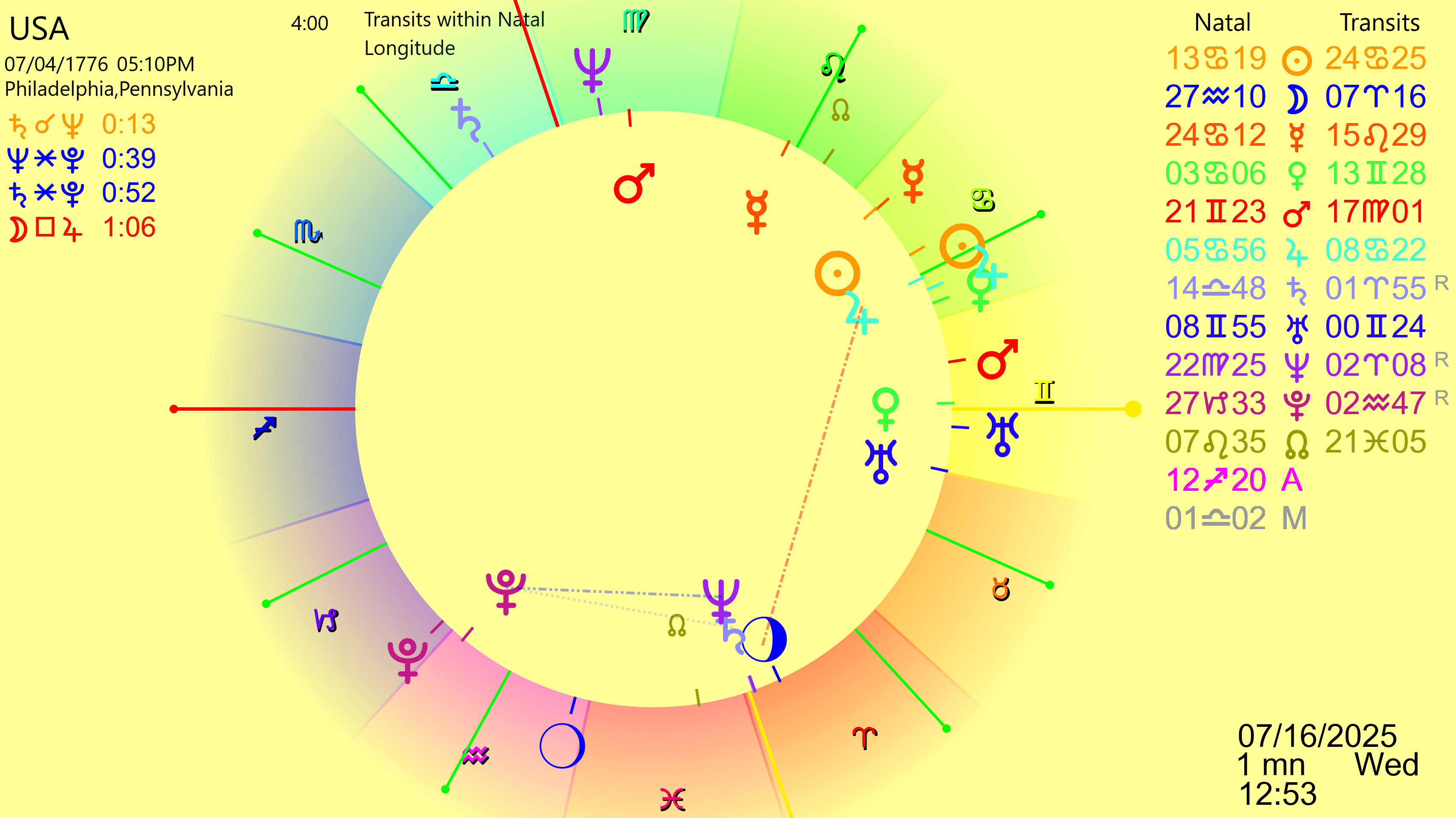
On February 20, 2026 Saturn will finally conjoin Neptune, the only exact conjunction of these two planets in this cycle; this conjunction is also conjunct the IC of the United States as well as the Aries Point.
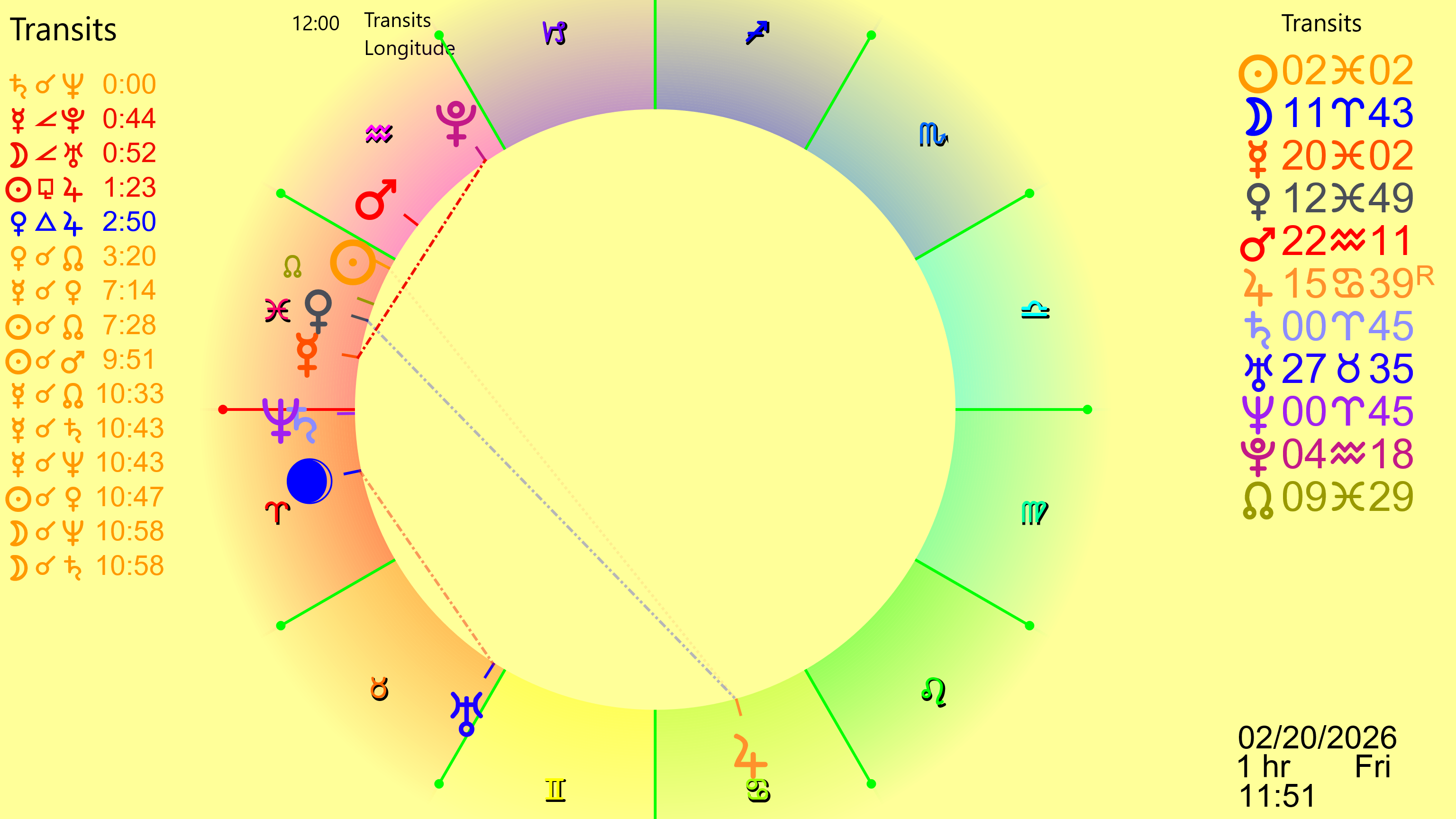
Saturn Neptune Conjunction
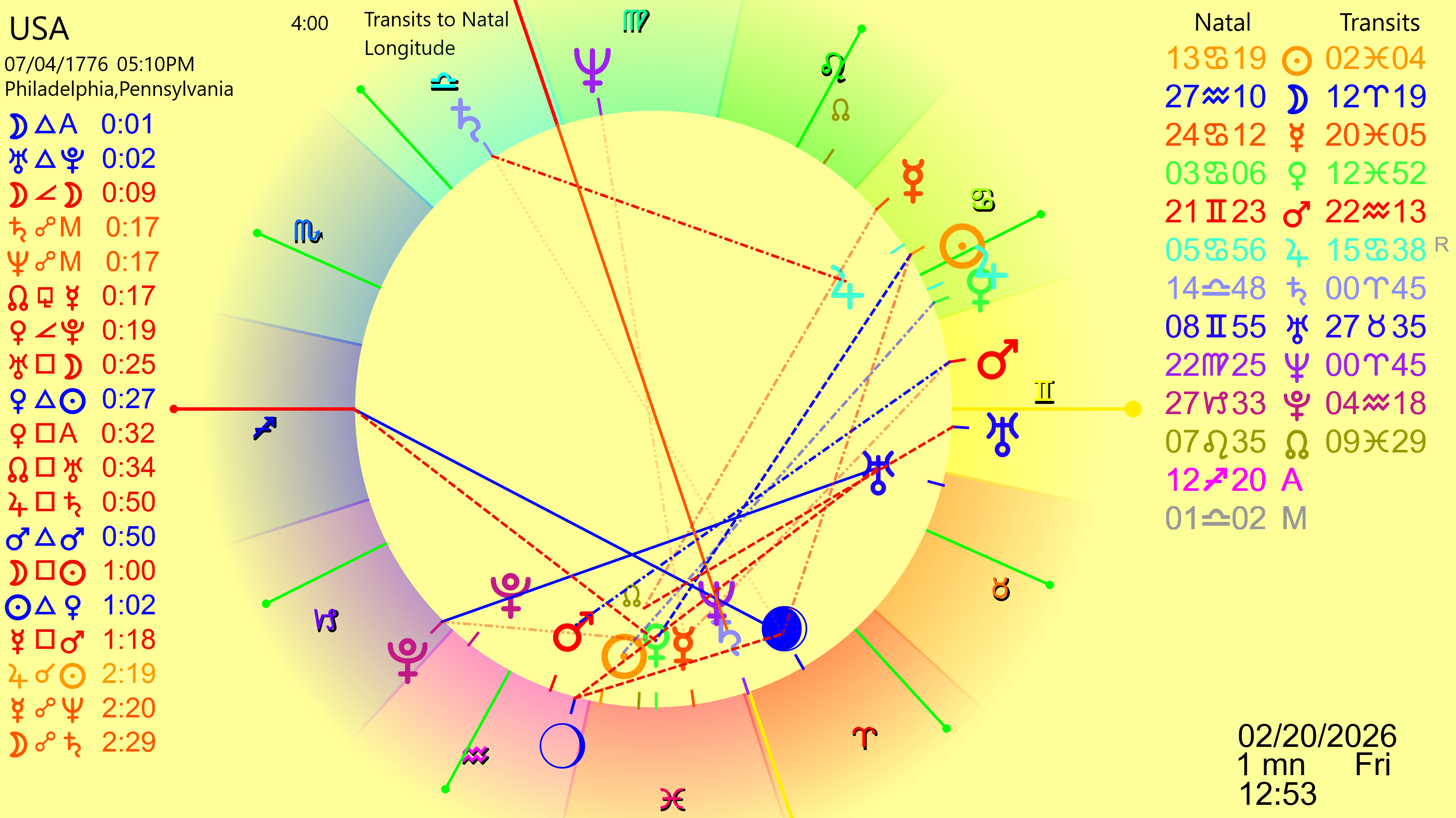
Saturn-Neptune Conjunction and USA

I don’t know when this triple conjunction of Saturn, Neptune, and the Aries Point happened previously, but consider that the Saturn Neptune conjunction happens every 36 years, and assume every degree gets the conjunction once, then the last time this happened was 36 X 360 or almost 13000 years ago. Perhaps the significant event at that time was what is called the “Neolithic Revolution” where humans developed agriculture and a more settled lifestyle. Of course, some people argue that everything started to go downhill for humanity after the Neolithic Revolution. But in either case, this was a major turning point for humanity.
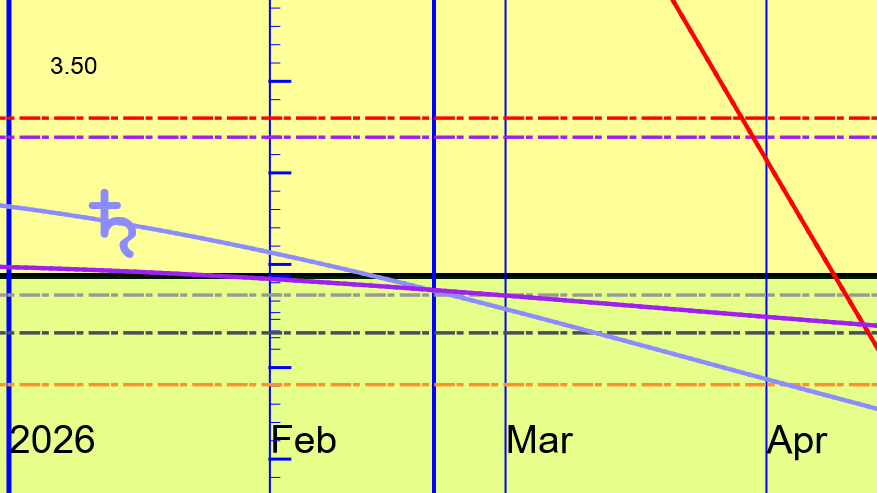
Magnified Graphical Ephemeris Saturn Neptune Conjunction

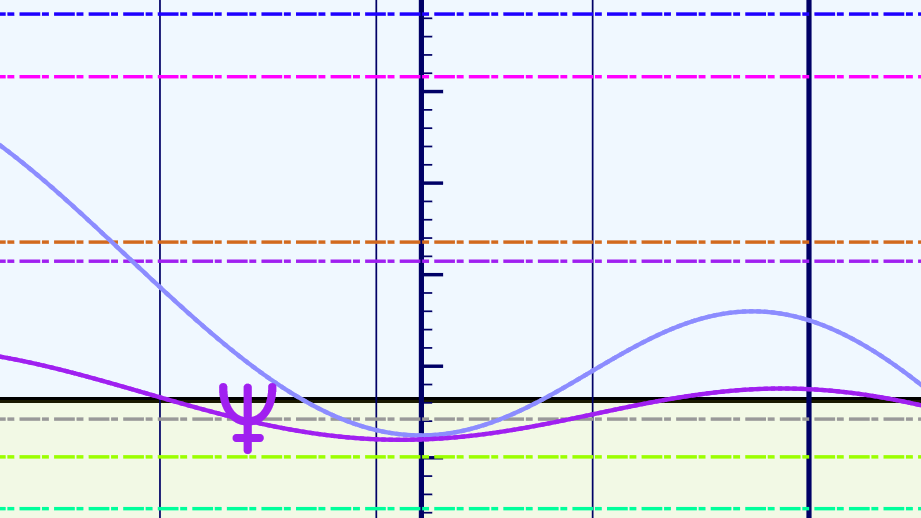
If we examine a magnified section of a graphical ephemeris we can see just how close this conjunction is to both the Aries Point (solid horizontal black line) and the Midheaven (dashed light grey line) of the United States. It is midway between those two points which are in fact close together. So not only do we have Saturn conjunct Neptune at the Aries point, incredibly significant to the world at large (which is represented by the Aries Point since everyone in the world has the Aries Point in common) but also this conjunction is directly opposite the MC of the US — conjunct the IC — and thus the base or foundation of the United States — which is what is represented by the IC — is directly hit by this conjunction. This will certainly shake up the foundations of the United States, which will affect the whole world, but you already can see that.
Saturn-Neptune Almost Exact Conjunction

In July of 2025 the Saturn and Neptune conjunction got within a quarter of a degree of exact and both went retrograde at the same time and thus the conjunction was never exact. In the magnified view you can see how both planets turned retrograde in unison.
Saturn-Neptune Almost Exact Conjunction
Saturn-Neptune Conjunction 1989

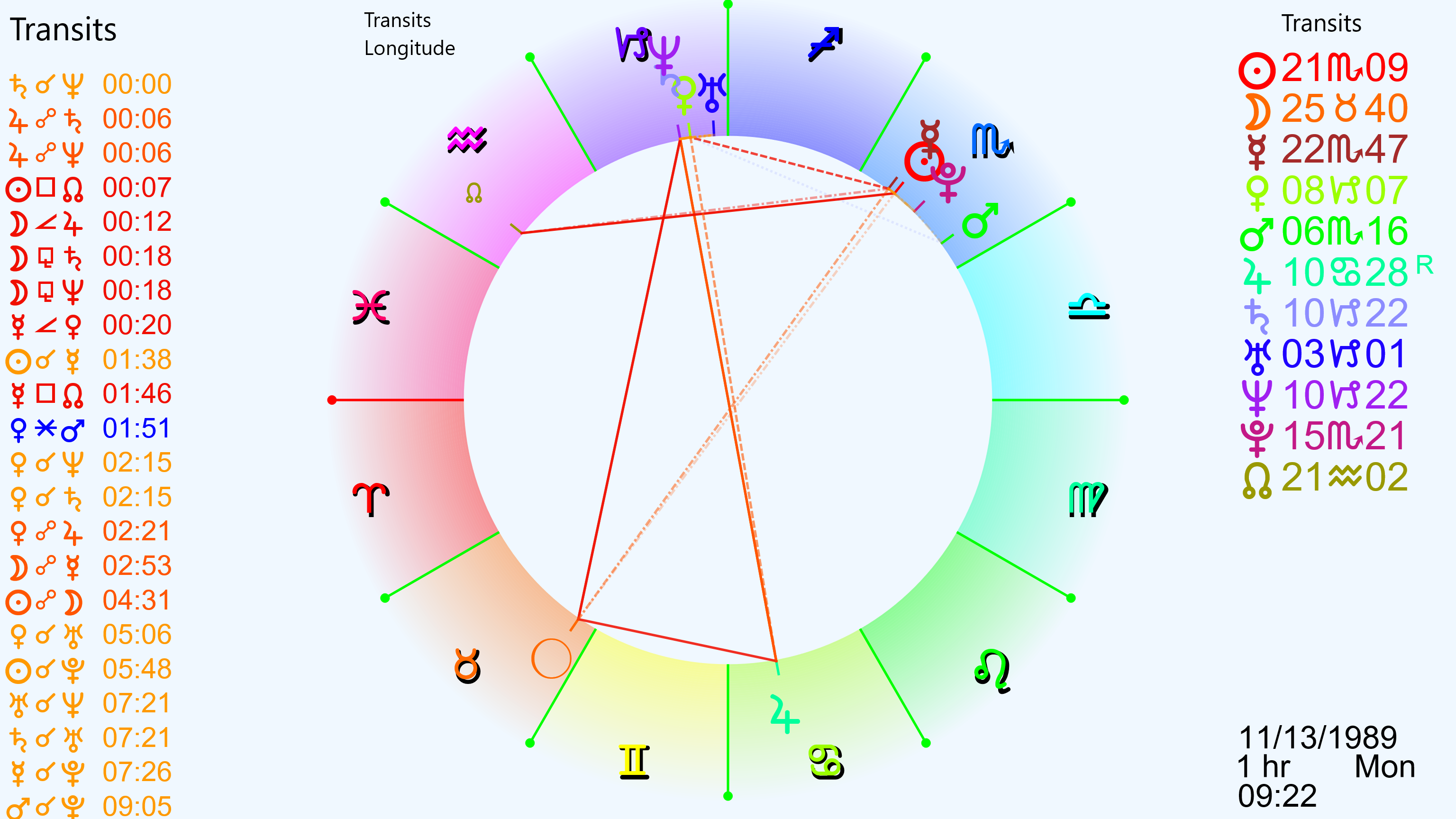
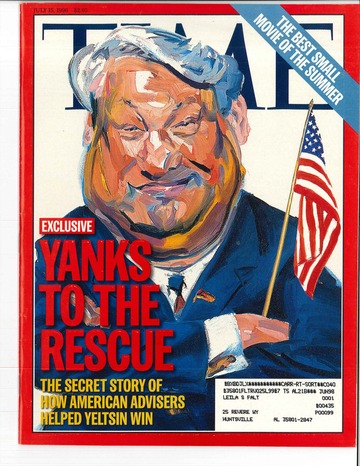
The last time this conjunction happened was in 1989. That year the conjunction happen three times; the most interesting was the third, on November 13, when Jupiter was closely opposite the conjunction. This Jupiter-Saturn opposition marked the midpoint — Full Jupiter so to speak — of the twenty year bi-decade that is the Eighties/Nineties. The fall on the Berlin Wall, which heralded the fall of the Soviet Union and other Communist Countries in Eastern Europe, happened on November 9, 1989. This supposedly marked the end of the Cold War (that had started at the end of the Second World War) and according to some this also marked the End of History (see The End of History and the Last Man by Francis Fukuyama which was published in 1992). This also involved a big change in the Western powers (see Cold War Triumphalism edited by Ellen Schrecker and published 12 years later). The United States took victory laps after this happened and President Clinton even managed to determine who the leader of the newly-born Russia was, as a cover story entitled “Yanks to the Rescue” shows. One can easily imagine the uproar if the Russian President was accused of helping an American win the Presidency!!
“Yanks to the Rescue”

Let us look at some other examples of hard aspects between Saturn and Neptune:
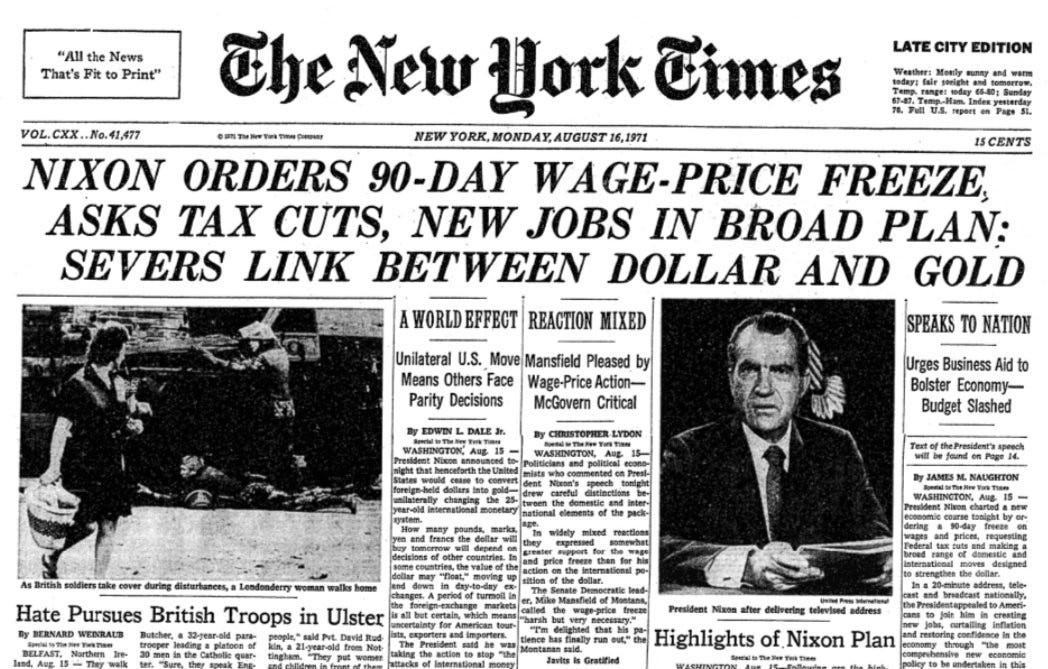
U.S. Off Gold Standard

An August 15, 1971 speech by United States President Richard Nixon was a big event for the world economy, but most did not realize how big for many years after. This event is considered the end of the Bretton Woods System that was established after World War II, named after the town in New Hampshire where the agreement was reached. After this statement by President Nixon, dollars were no longer convertible to gold. Among the many ramification was that money was made not through making actual things but through financial manipulation. In the long run, this decision by Nixon shifted power from industry to finance, and so what was capitalism of the Sixties and Seventies is not what capitalism is now.

Nixon Shock Speech

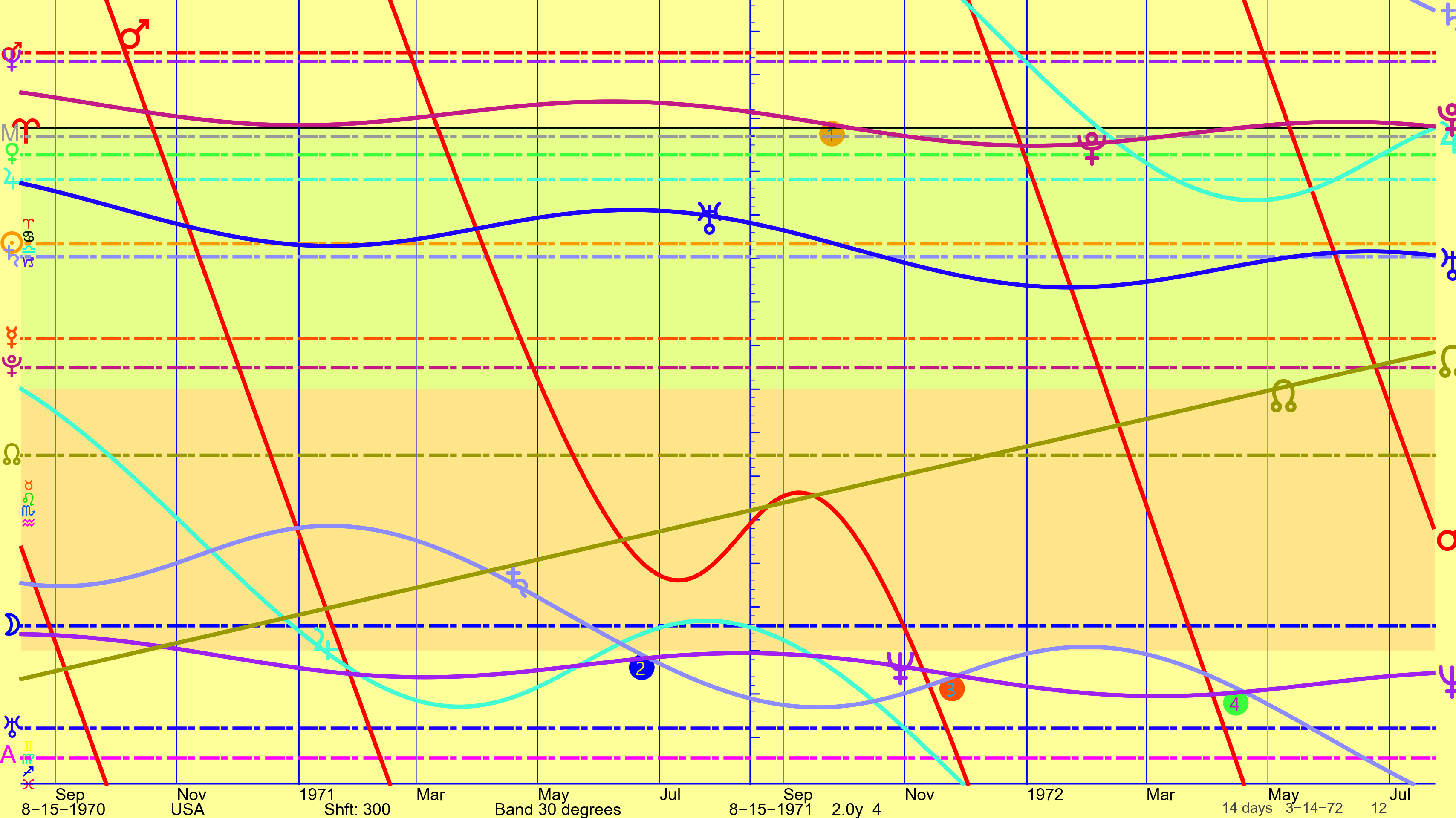
When we look at the chart for August 15, 1971 we don’t see anything specific. But looking at the graphical ephemeris around that date reveals something interesting.
Nixon Shock Graphical Ephemeris

Saturn and Neptune made three oppositions — indicated by 2, 3, and 4 — once before and twice after the speech whose date is indicated by the center line. In addition, the Jupiter Saturn opposition (much like the Jupiter-Saturn opposition which occurred almost twenty years later at the fall of the Berlin Wall) occurred twice before the speech and once after.

But there is also Pluto crossing the Cardinal Axis at 0 Libra — indicated by 1 — and also conjoining the MC of the United States. The period of 1972 and 1973 is known in the United States as the Watergate crisis, which ultimately saw the only resignation of a US President in history. That event is certainly appropriate for Pluto on the Midheaven of the US; at the time many expressed disbelief at what was happening to the government of the country.

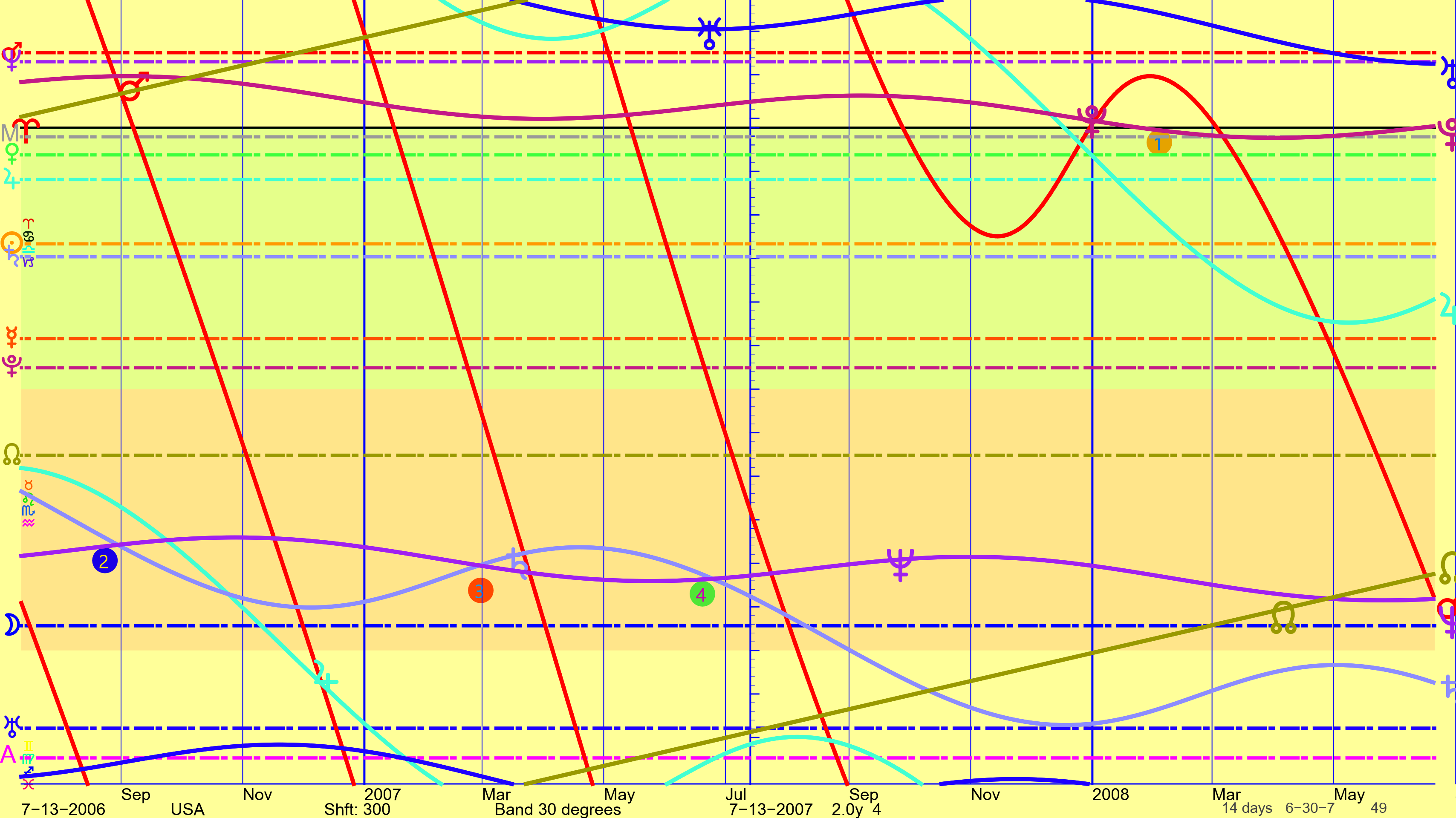
The “Great Recession” was a meltdown of the financial markets in 2007, 2008, and 2009. Unlike the Great Depression of 1929, which had an exact date — Dark Thursday (October 24, 1929) — when the stock market fell greatly after booming for much of the decade, we don’t have an exact date for the Great Recession. But by looking at the graphical ephemeris for that period we can see what happened.
The Great Recession

Saturn was opposite Neptune three times right before the “Great Recession” at 2, 3, and 4. In addition Pluto crossed the Cardinal Axis as it enters Capricorn, indicated by 1. Thus Pluto is square the MC/IC axis of the United States. This is similar to the Nixon Shock, where there was also Saturn opposite Neptune and Pluto making a hard aspect to the Cardinal Axis and the US MC. The midpoint of these two events was the conjunction of Saturn and Neptune marked by the fall of the Wall.

Notice that the event of note doesn’t always happen at the time of the exact aspect. It did for the fall of the Wall, but for both the Nixon Shock and the Great Recession there was a time delay. Thus whether or not a significant event happens close to February 2026 or is delayed months is something we will see. Stay tuned….
The Great Recession, The Rise of Britain, and the Reformation

These three events appear to have nothing in common, except that that all shook the foundations of the world.  But they did have something in common in terms of symbolic meaning.   I will discuss these three   events and show the commonality.   It is of course difficult to get exact timing of these  three events, but we only know when they were under way, that is, shortly after they started.

“The Great Recession”  is now commonly used to refer to the economic meltdown, or whatever you want to call it, that happened in the period 2007-2009.  It wasn’t as bad as the Great Depression, but it was, and still is  for many people, worse than anything else they experienced in  their lifetime, thus the term The Great Recession.  The most commonly used event as a marker for the Great Recession, but not the only one, is the fall of the Lehman Brothers Bank on September 15, 2008.  But the housing bubble  that had been growing, in the United States as well as other countries such as Ireland and Spain, burst in the middle of 2007 and the recession is said to have bottomed out in the middle of 2009, so at the very least we can considered the event to have happened 2007 to 2009.  On October 9, 2007  the Dow reached a record high of 14,164  which it would not see again for several years.  The meltdown is considered  to have started on August 9, 2007, but that is only obvious in hindsight.

plucap1

Great Recession

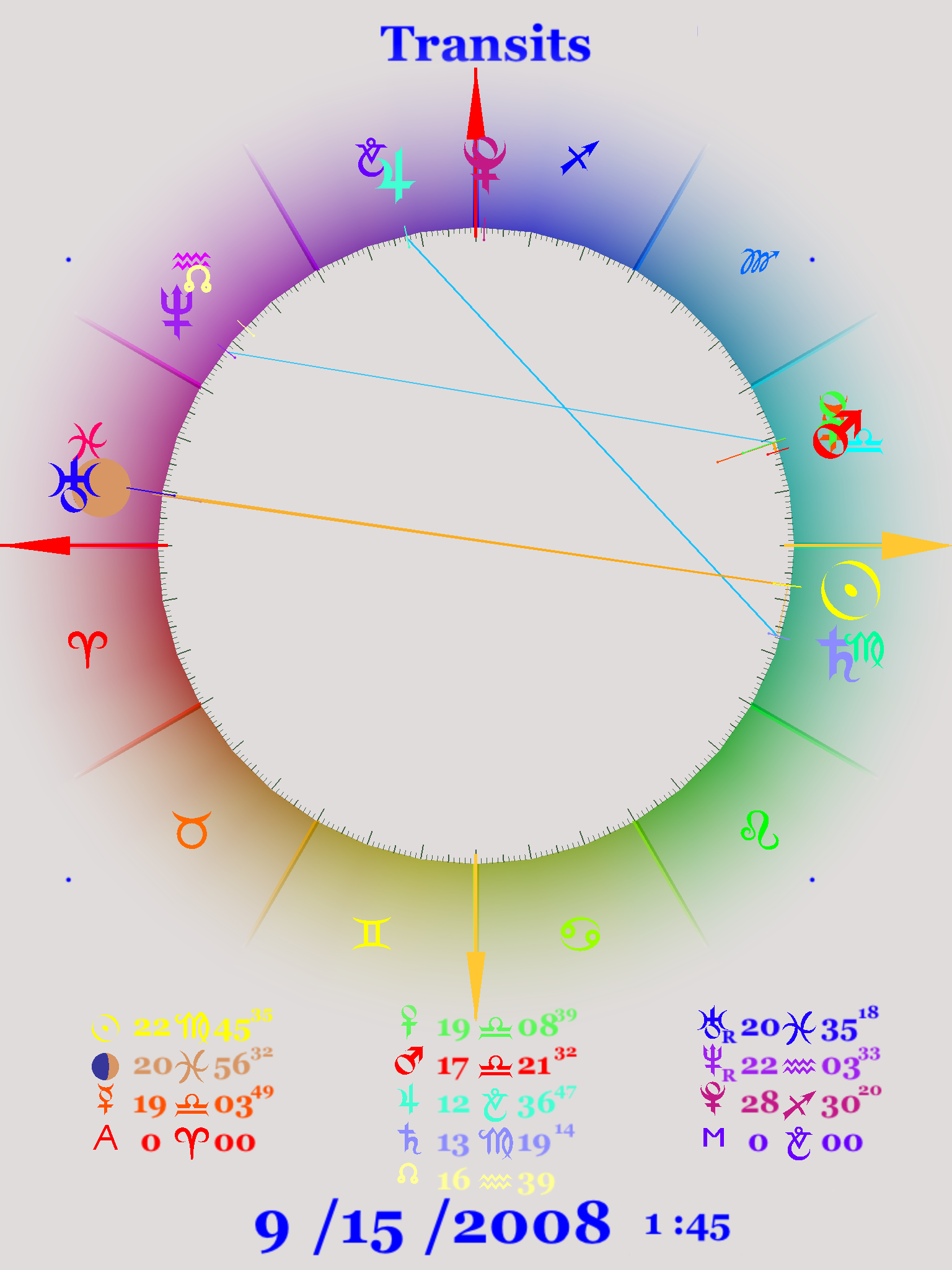
Looking at the first chart for September 15, 2008 we see that Pluto is very near to 0 Capricorn, having crossed it the first time this cycle in January of the same year.  It was near the cardinal point through 2007, 2008, and 2009.

Since this is the crossing of the cardinal axis, I consider it an important event, more important than the Great Depression of the Thirties, which is commonly said to have started in 1929.  We are regaled weekly by now that the Recovery has happened, that the Great Recession is so far removed in time, and that the economy is doing so well, that we should forget about it.  But for the great majority of people, the good times have not returned, if the times before 2007 could be considered “good”   for many people in the United States.  Even though the unemployment rate in the US has fallen,  many people have dropped out of the job market, and thus are not classified as unemployed, and the wages of the new jobs are much less that of the old jobs lost in the Great Recession.  And it appears that Europe  will soon witness its third dip in GDP since  the Great Recession, Japan is having problems, and the economic  news from China is not as rosy as it was a few years ago.  In  the United States one of the main effects of the Great Recession was to transfer more money to the really wealthy, so that now the top one percent of the population makes more than 25% of the national income, a figure that has risen over the last decade.   The effects of this so-called Great Recession will be with the world for a long  time.  And in 2015 many people, but not government officials, are predicting bad economic times ahead.  People are waiting for the other shoe to drop.  The price of a barrel of oil has dropped to almost half of what it was a year ago, and many countries and businesses are expected to take a hit.   The next three months see the last of the Uranus-Pluto square, and the square is tight for the entire period.

It is difficult to find an exact date for the rise of England to be the number one power in the world, replacing  Holland, but many historians maintain that it happened with Britain’s victory in the Seven Years War, known in the colonies as the French and Indian War.  I discussed this a few weeks ago.  Even knowing that, it is difficult to pinpoint the exact date when England won.  Was it the loss by the British at the Battle of Fort William Henry in August 1757?  Was it later, since at that date the war had only started?  Was it with the death of General Wolfe at the Batttle of Quebec, as shown in the famous painting by Benjamin West?   One clear date, though it is surely late, is the Treaty of Paris signed by England, France, and Spain, where France gave up their part of North America to either England (Canada) or Spain (Louisiana).   The Treaty of Paris was signed on February, 10 1763.  But  battles can change the course of history: The fighting in North America that culminated with the battle  that “James Wolfe fought outside the walls of Quebec on 13 September 1759 altered the world in a  dramatic and lasting way.” {Dan Snow Death of Victory 2009]

The rise of England to be the world power changed much for the next 150 years.  England had many colonies in all parts of the world, including one that was lost shortly after they became top dog, and maintained those colonies at least until the end of World War Two, almost 200 years later.  The history of a large and increasingly important country, India, was influenced strongly by England and its policies there, including the dominance of the Hindu people, who  worked well with the British, over the Muslim people.  Winston Churchill, the British Prime Minister during World War Two,  strongly influenced world and United States policy in those years, including the formation of the Cold War, even though Britain was no longer the most powerful nation.  And the list goes on.  The dominance of England after the Seven Years War strongly influenced the  world as we know it now, it ways  great and small.

plucap2

Treaty of Paris

The chart for the signing of the Treaty of Paris show Pluto just three degrees past the 0 Capricorn cardinal axis.  It had been passing back and  forth over 0 Capricorn during the Seven Years War.  This was about 250 years before the Great Recession start, and thus just one Pluto cycle previously.

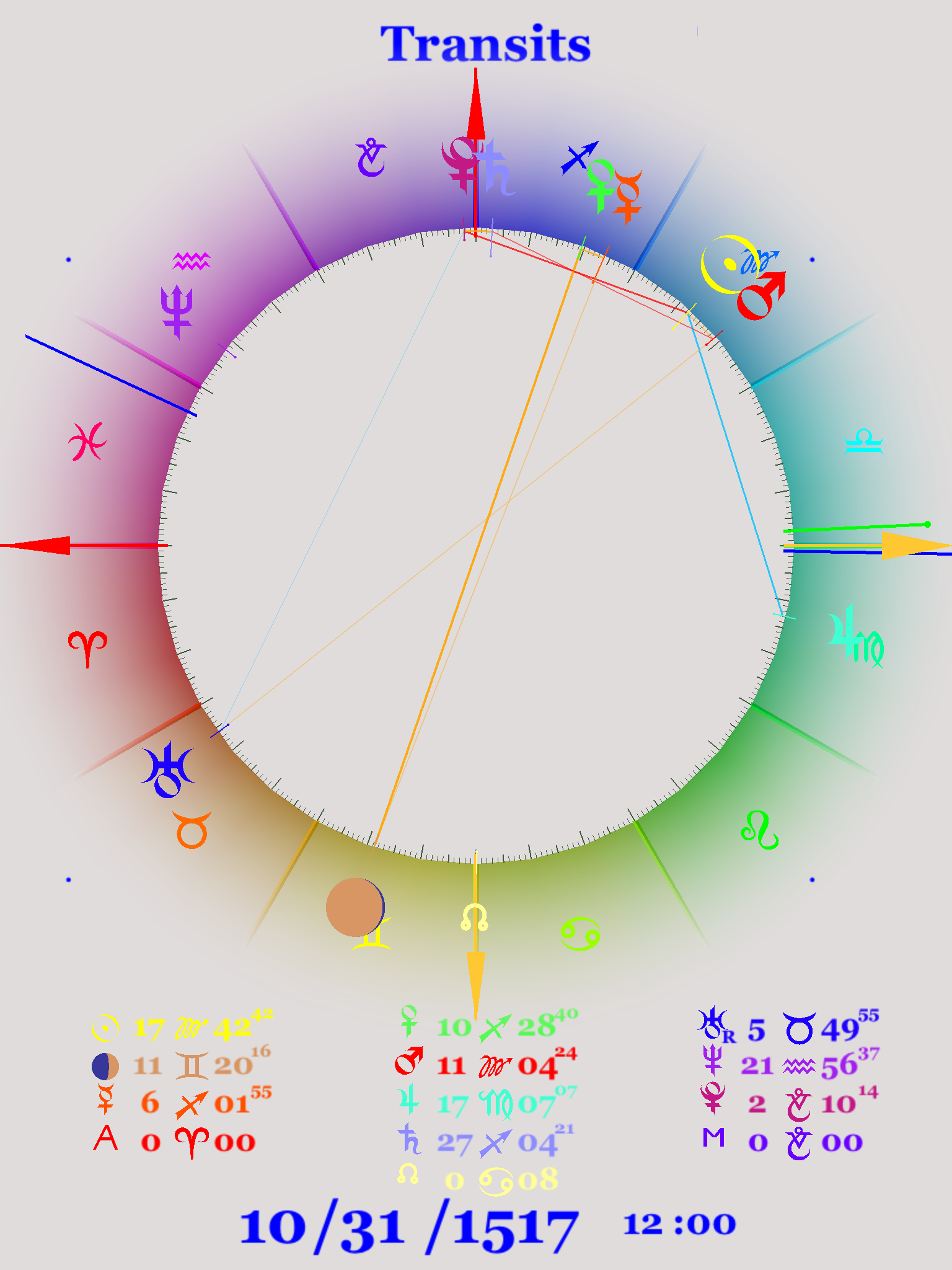
And what about the Reformation?  There were several movements in that direction earlier, and dissatisfaction with the Roman Church, which at that time was the only type of Christianity known since all apostolic forms had been long banished, but in general the date for the Protestant Reformation is assigned to October 31, 1517, when Martin Luther supposedly nailed his Ninety-Fives  Theses to the door of the All Saints’ Church in Wittenburg, Germany (Prussia).  Of course, the ideas contained in those theses had long been percolating in the mind of Martin Luther.  To say that this is a major  event for the world would be an understatement.  There were battles in Europe between the newly-formed Protestants and the Catholics, culminating in the very bloody Thirty Years War that decimated Germany.  (Some  think the current conflict between the Shias and the Sunnis is the Islamic equivalent of that war.) And of course there is evangelical Protestantism that has spread into parts of the world such as Latin America and Africa and is in competition with Catholicism or Islam in those areas.  America was founded by Protestants and for a long time “Catholic” was a  dirty word in that country.

plucap3

Reformation

In  the chart for October 31, 1517 we again see Pluto has just crossed the Cardinal axis at 0 Capricorn.  This is again just one Pluto cycle before the previous event, and two Pluto cycles before the Great Recession discussed first.  Again, the state of the world was changed, for good and bad, and we still live with the consequences of that event, the Reformation.