Antietam

The battle of Antietam, also called the Battle of Sharpsburg since it was fought near Sharpsburg, Maryland, was an important battle in what is commonly called the Civil War of the United States.  The Civil War is a term mostly used by descendants of the Union side; the preferred term for the descendants of the Confederacy is “War Between the States”.  In actually, this wasn’t a real civil war, since in the case of a civil war two powers are trying to take over the government; but in this case one power wanted to leave the government.  We see many of these in current times, resulting in Eritrea and Ethiopia, South Sudan and Sudan, and potentially Scotland and Great Britain and Basque and Spain.

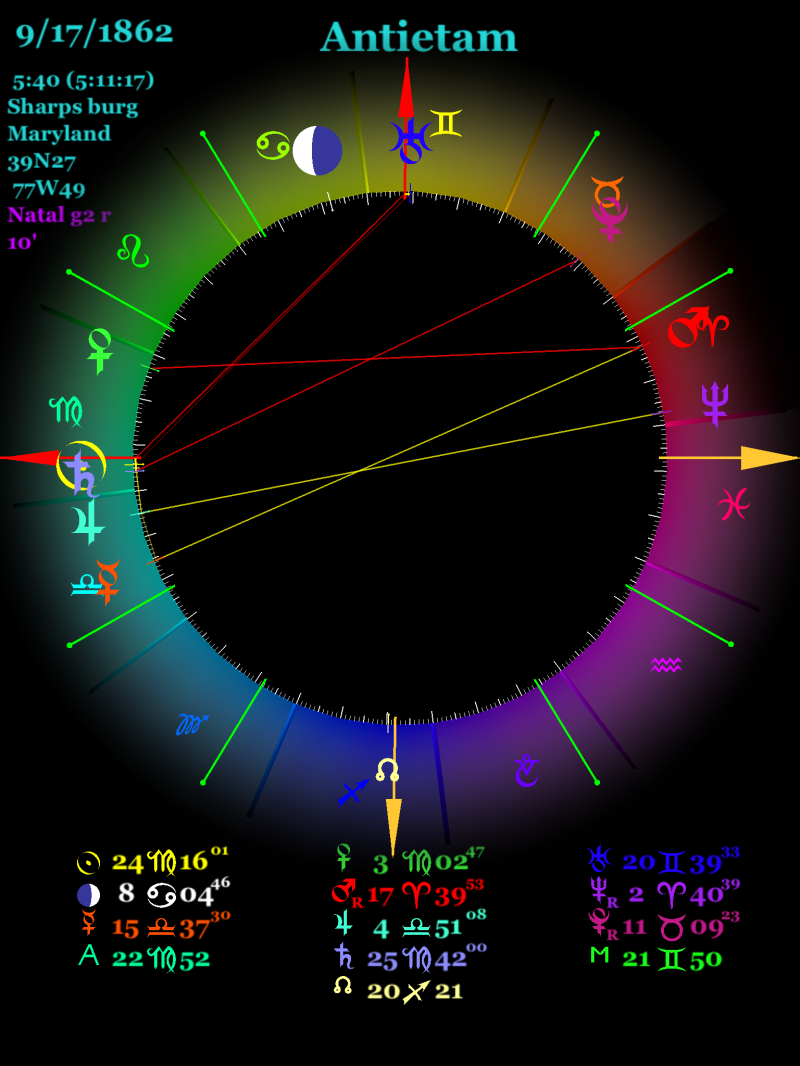
The Battle of Antietam is considered the bloodiest day in American History, though a natural disaster in Galveston did claim more lives thought over more days.  It was fought in the state of Maryland on September 17, 1862.  The battle was started before dawn on that day, which gives us a time upon which to draw a chart.  Twenty thousand men were killed, wounded, or missing as a result of that battle.  Even though the battle is seen now as a draw, neither the Union or Confederate sides getting a victory, it was enough to cause the President Abraham Lincoln to feel confident enough to issue a preliminary Emancipation Proclamation, that at last reveled the true nature of the Civil War.  This document allowed Great Britain, who had been thinking of recognizing the Confederate side, even though the UK had emancipated its slaves in 1833, to finally decide that the Union side was the one to back in the country that had been its colony less than 100 years previously.

Sharpsburg is on the Antietam creek, a tributary of the Potomac; it is about a mile north of the Potomac and about fifty miles west of Washington, DC so it was very close to the seat of the Union government and home to President Abraham Lincoln.  Antietam was the first large scale battle to take place in the East where the Confederate soldiers had invaded the Union territory.  This was one of the reason it is considered a important battle, and why it was considered Union victory, even though it wasn’t.  The leaders of the two side were George McClellan of the Union side and Robert E. Lee from the Confederacy.  Even though Lee’s forces were outnumbered, McClellan thought that his forces were outnumbered.  Because of McClellan’s lack of aggressiveness in this and other battles, he was soon relieved of his duties by Lincoln.  The battle is famous for another, more gruesome reason.  Photography had been invented during the Uranus-Neptune conjunction forty years before, and Mathew Brady is famous for photographing scenes from the Civil War.  The photographer Alexander Gardner was working for Brady and in this battle he captured the first photos of dead people where they fell in battle. These were shot in 3-D, Gardner’s standard at the time, and they were shown in Brady’s gallery in New York City and were available by mail order from a catalog.  One can try to imagine the sight of dead American bodies seen by citizens in their parlors — it was quite a shock and truly brought home the carnage of the War to people.
antietam

The Battle Starts


This first chart is an event chart for the beginning of the battle.  According to accounts, the troops started before dawn.  I’ve set this chart for a few minutes before the Sun hit the Eastern horizon: 5:40AM.  I did not see before I did the chart that Uranus was exactly on the Midheaven at that time, which is certainly appropriate for a battle where there is much excitement and changeability.  Mars, of course, is in the Seventh house where the enemy would be met.  Neptune is also there — the fog of war and McClellan’s mistake about Confederate troop strength.  The Sun is square Uranus, which would occur all day.  There is a very tight (under one half degree) sesquiquadrate between Saturn and Pluto.  We have discussed before the tragic consequences that befall the nation and the world under a hard aspects between Saturn and Pluto, and here we see it again.  The Sun is conjunct Saturn — much hard work on that day, but Jupiter is in the first house, and indeed the outcome — the Emancipation Proclamation — was positive.  There are two clear oppositions from the first to the seventh houses — Mars opposite Mercury — angry words — and Jupiter opposed to Neptune — apparent happiness.
antietan_later

Later That Morning


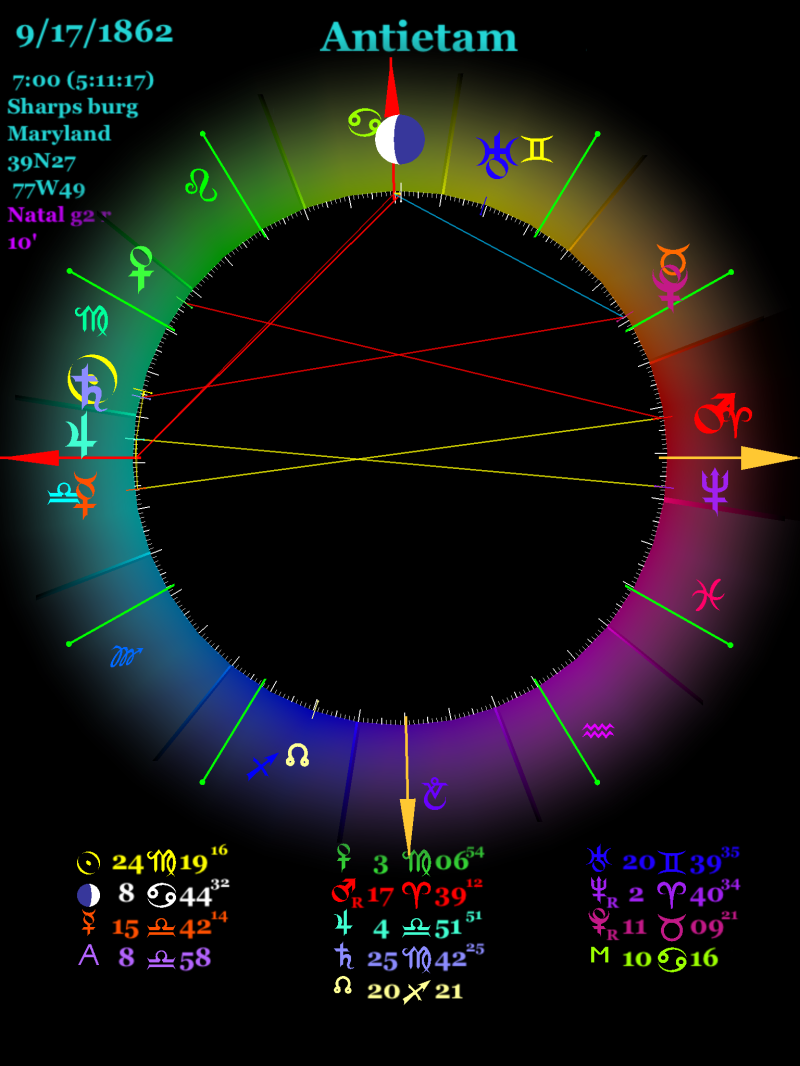
Here is a chart drawn for 7 that morning.  You can see that the Sun has already risen, but it is still square Uranus.  This chart shows that the last quarter Moon is at the Midheaven in the early morning, where it would be visible.
 

antietam_usa

Antietam-USA


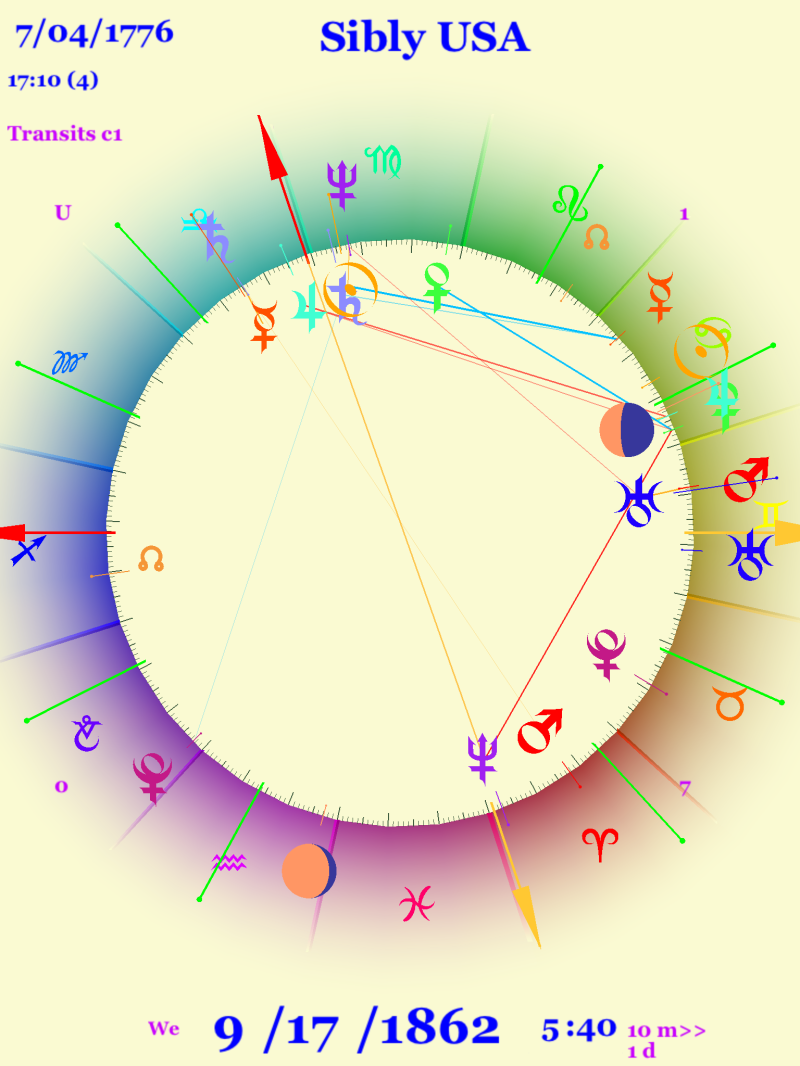
And here is a chart for this event within the USA natal chart, where we can see the effects of the battle on the country.  That sun conjunct Saturn is near the top of the chart – the exact conjunction of the Sun with the US Midheaven is about a week later — this is high noon for America for the year.  Neptune is opposite the MC, indicating the the Civil War is a generational crisis of the country.  Probably the most obvious aspect is transiting Uranus conjunct the Mars of the United States, Uranus inflaming the martial spirit of the country, and it has been pointed out this was an important battle where the Confederate troops first invade the North and got near to the capital.
emanc_proc

Emancipation Proclamation


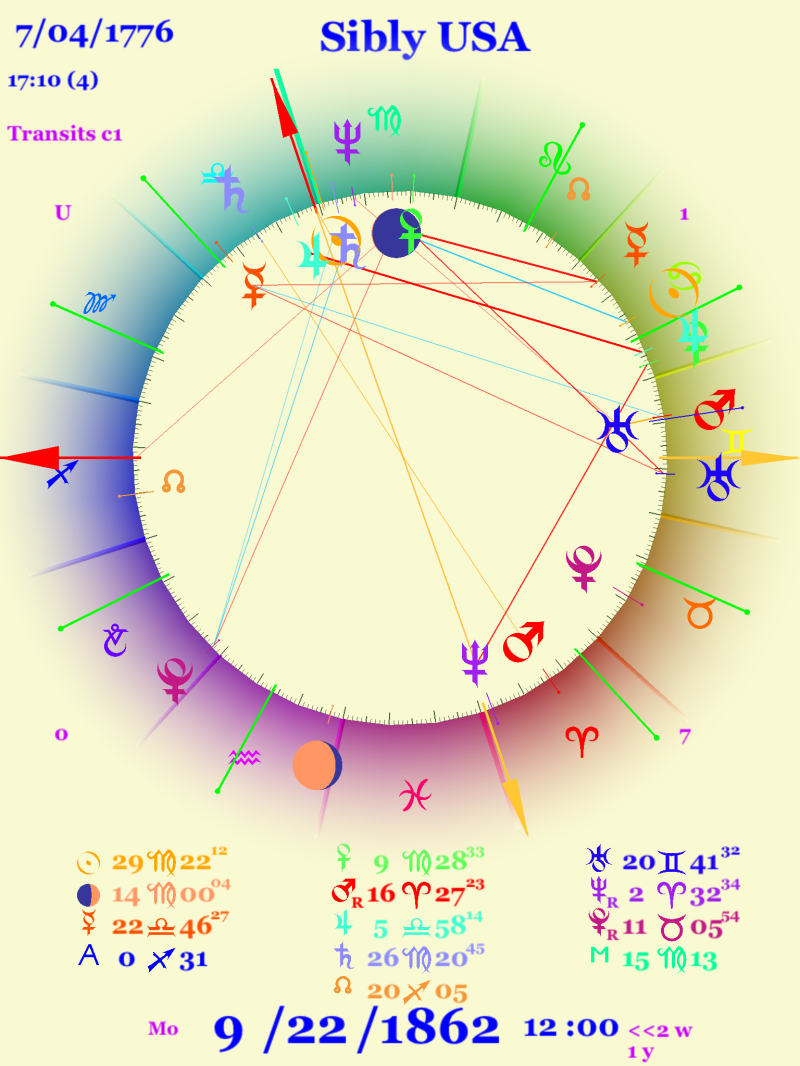
And finally here is a chart for when Abraham Lincoln signed the Emancipation Proclamation.  You can see the Sun has now moved to be conjoined with the MC — this is the crowning point of the year for the US.  And we can see that Venus is conjunct the Moon at 12 noon, which is a good guess for when the bill was signed.  In this case Venus represents Justice, which by signing this bill Lincoln was assuring for the slaves that were affected — those living in states which were in conflict with the Union.  The Moon is almost New — which would happen in a little over a day — signifying  as New Moons do the start of a new cycle.
Presidential Mistakes

Picking the best and at times the worst of presidents is an endless contest.  In most lists, the best presidents of the United States are Abraham Lincoln, the sixteenth President, and  Franklin Roosevelt, the thirty second President — both Aquarians.  Both are considered the top two Presidents, in no particular order.  But both made an extremely bad decision,  which no one credits them with, that were among the worst presidential decisions every, and the results of which we still live with.

During his first term, Lincoln’s Vice President was Hannibal Hamlin.  Hamlin was a radical Republican who fully supported the abolishment of slavery.  He was replaced in the second election by a Democrat from the border state of Tennessee and they ran on, instead of the Republican Party ticket, a new party formed for that election only called the National Union Party; the idea was to show that the Democrats and Republicans were united and that the Civil War was a bipartisan effort.  Unfortunately, Lincoln was assassinated shortly after the election of 1864, which the National Union Party won.  Lincoln’s chosen vice president was Andrew Johnson, a Democratic Senator who still  supported  the Union, even though Tennessee had joined the Confederate States.   It was for that reason that Lincoln decided to have him on the ticket of the new  union party that was set up just for the election of 1864. By early 1865 the South had lost the Civil War, and Lincoln had been assassinated, so Johnson was the new President.  Johnson had given a bad impression when he had shown up for his inaugural as vice president drunk, but as Lincoln had explained, that was only because he was so nervous. Johnson was never a friend to black people, either when they were slaves or after the War ended.

The period between the end of the war and 1876 was called Reconstruction; the South was suppose to re-enter the Union and the freed blacks who had formerly been slaves were to have been brought into full-fledged citizens of the United States. To say that Reconstruction was unsuccessful would be an understatement, and we are still living with the consequences of that period.  The so-called Black Codes were soon passed in the South, which restricted the freedom of the newly freed  slaves.  While there were more Blacks elected to the Congress during Reconstruction than ever since, few long lasting changes  were made and after the end of Reconstruction the South tried to revert as closely as possible  to the antebellum ways  of treating their black citizens.  Andrew Johnson did not help Reconstruction, and he so angered the Radical Republicans in Congress that they passed a law so that Johnson would break it and they would have an excuse to impeach him, and they  did.  Johnson goes down in history as the first President to  be impeached; he was not convicted, but after that his frosty relations with Congress did not improve.

Reconstruction ended in 1876, even thought it had not been finished.   What happened was the election of 1876.   That was a interesting year in the United States.  It was the centennial of the founding of the country, and there was much celebration on the Fourth of July, a special birthday.  Just a few days before that party a civil war veteran named George Armstrong Custer had been killed fighting Indians and the news had just reached the East.  The current President, Ulysses Grant, who had accepted the South’s surrender in the Civil War, was very unpopular.   The election that November was disputed, and in fact was more controversial than the recent election of 2000 and Bush v Gore. It was seemingly won by the Democrat Samuel Tilden and the Republican Rutheford Hayes lost.  But in several states both the Republicans and Democrats turned in electoral college votes, which disagreed.  Eventually a committee was formed consisting of members of the Senate, House, and Supreme Court.  The committee was suppose to choose between the disputed electoral votes.  As a result, the Republican was chosen, but the Democrats, who were the party in the South of white people, also got something that they wanted:  a removal of troops in the South and thus an end to Reconstruction.  The whites in the South could go back to interfering with the newly freed slaves with no interference from the Army.   The new President was referred to a Ruthefraud Hayes after that election.

lincoln_assassination

Assassination of Lincoln

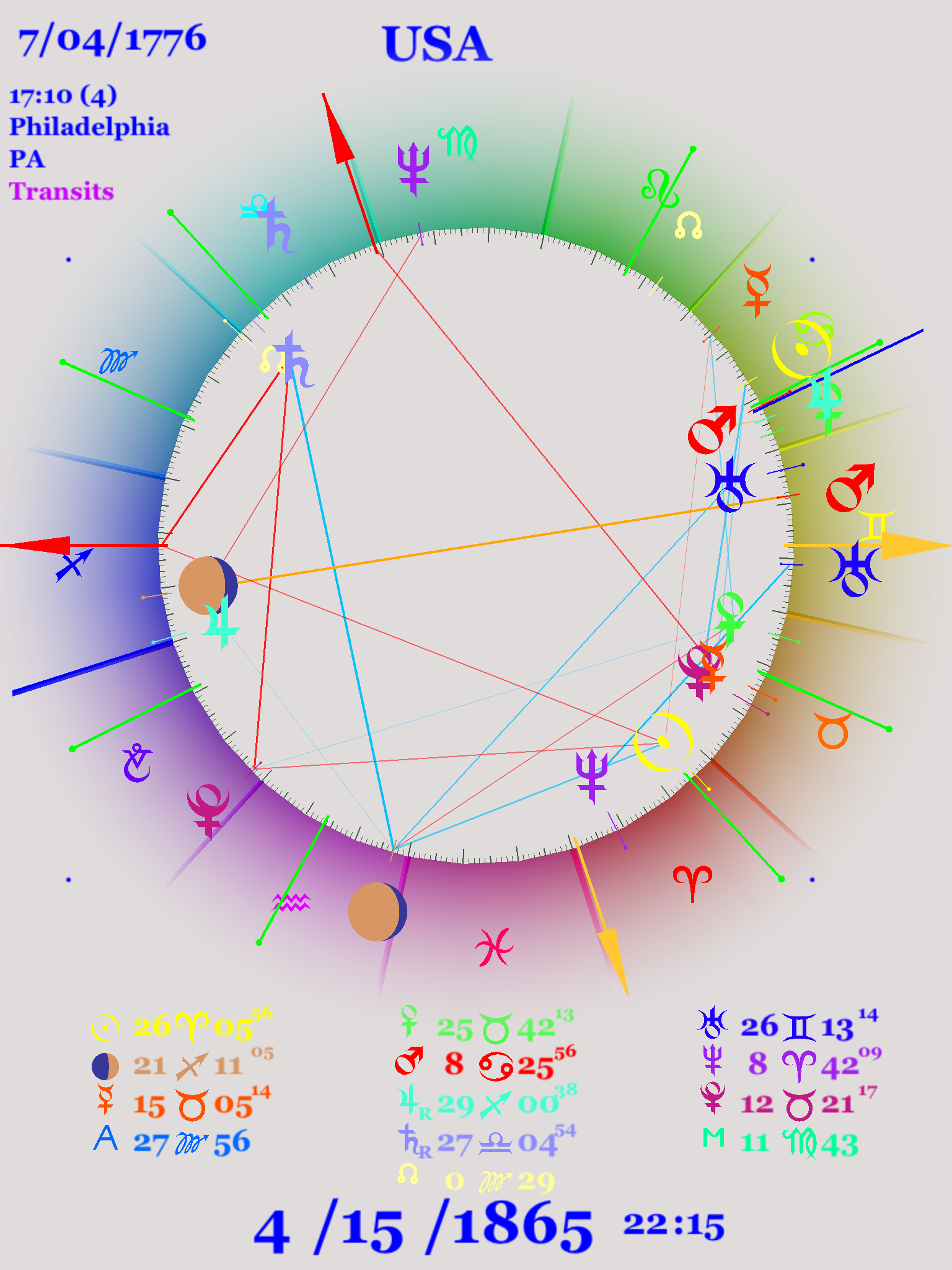
The first thing we look at in this assassination chart is the position of Mars, that indicates gunshots.  Since we have a time, the position of the Moon is valid, and it is opposite the US Mars.  Transiting Mars is on the cusp of the eight house (the long dark blue line extending out from that planet indicates this) which in traditional astrology is the house of death.  Mars is within the core of the US chart — Sun, Venus, Jupiter — and approaching an exact conjunction with the Sun.  Mercury is sesquiquadrate the Midheaven, and the news of this event was communicated rapidly, besides taking place within a theater.  Saturn, depression, is aspecting the Moon, Pluto, and the Ascendant of the US chart.

***********
Franklin Delano Roosevelt had an unprecedented four terms.  In fact, the twenty second amendment to the US Constitution was passed to prevent this from happening again.  In his third term, Roosevelt had as Vice President Henry Wallace, who had been Secretary of Agriculture during the first two terms and an important supporter of the New Deal.  Wallace was an American original.  He was a farmer from Iowa whose political beliefs were out of step with the Washington  Establishment.  He was also someone who had esoteric beliefs that were out of place in Washington.  In fact, it was his idea to put the eye on the pyramid on the back of a dollar bill.  This corresponds directly to something in the astrological birth chart of the United States, as we will discuss at some other time.  Not only was he FDR’s Vice President in his third term,  he was also Roosevelt’s choice for the fourth term.  But by that time Roosevelt was noticeably sick, and the Democratic Party officials knew he wouldn’t last for four more years, so they knew that whoever was vice president would become President, and they wanted someone in that position that they could control, and they did not want that person to be someone with the maverick ideas of a Henry Wallace.  They convinced FDR to nominate Harry Truman, who had supported New Deal policies and was also from the  Midwest, but was not an independent thinker and could be trusted to take orders.  Some people called him a hack, and his start in politics was the result of action by a local political organization called the Pendergast machine.  But the convention, which was heavily in favor of Wallace, would have selected him anyway, except the power in the convention hall failed conveniently and the selection was put off to the next day.

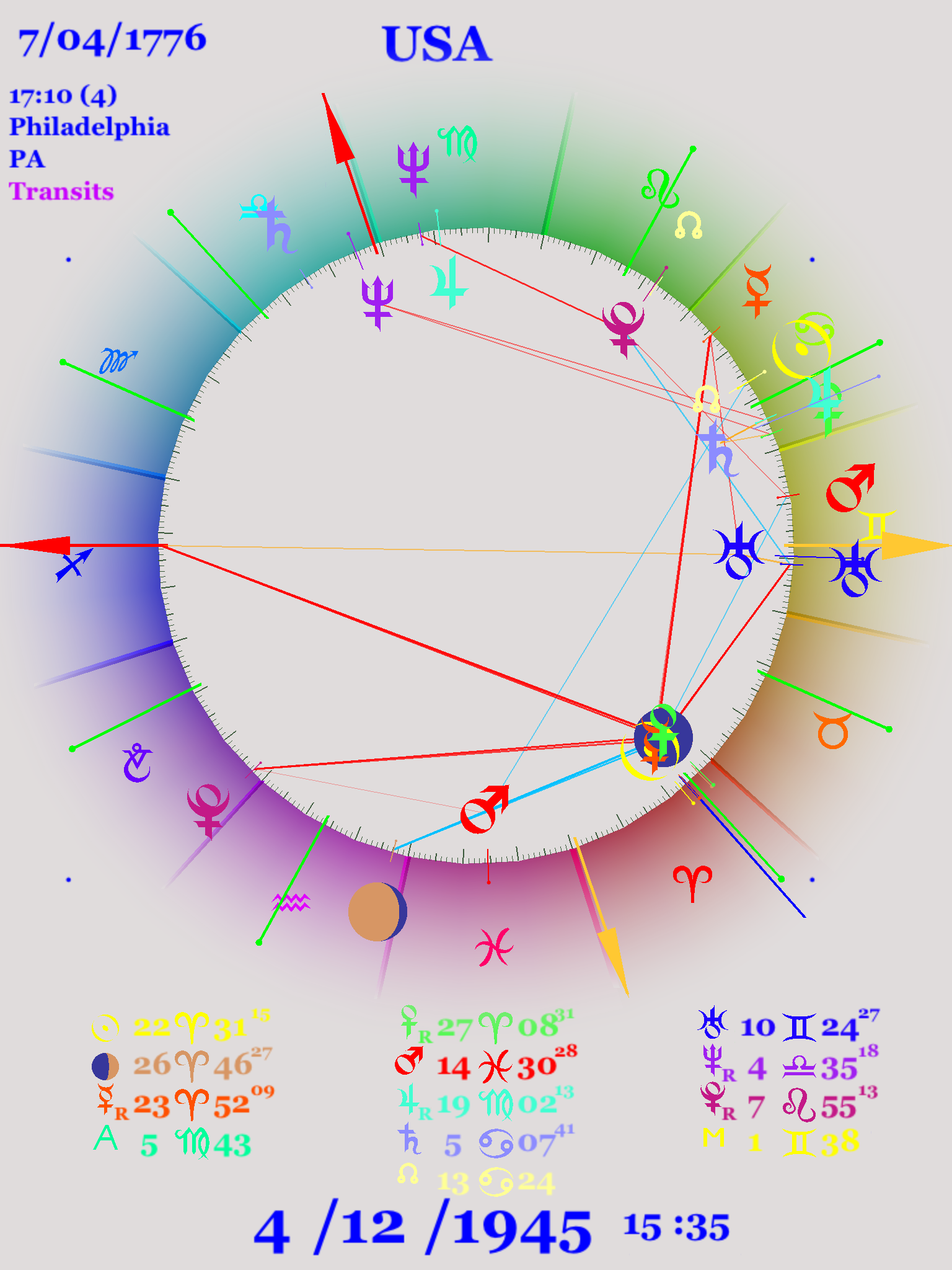
While Wallace really supported FDR’s policies, especially in regards to the Soviet Union, and he had been in the Roosevelt cabinet  since the first  election, Truman did not support the Roosevelt foreign policy and was strongly influenced by such people as his Secretary of State, James Byrnes.  As a result, Truman was in charge of ordering the atomic bombs dropped on Japan, and he  took a tough policy towards the Soviet Union after the war ended and ignored the agreements made at Yalta.  He helped bring the policy of anti-communism to America, which led to McCarthyism, and helped bring the Cold War  with his Truman Doctrine.  Conservatives and liberals did not like Wallace at all, and this belief still exists.  I  recently saw an article in the New Yorker from last year defaming Henry Wallace.  But if Wallace had served as President after the war, the Cold War would have had much less chance of happening, and the future of the world   would have been considerably different. Truman brought in the National Security State, which has only gotten stronger after 9/11. As discussed previously the beginnings of the NSS changed America’s path and position in the world.

Even though the Cold War is over, the Cold  War tendencies to mistrust the Russians are still in full force in America, and has led to a second Cold War and the accompanying  danger of nuclear war.

fdr_death

Death of Roosevelt

In   this chart we have a conjunction of four planets in Aries  — Sun, Moon, Mercury, and Venus — and a new Moon had happened  eight hours earlier.  This quadruple conjunction is aspecting much of the chart: Moon, Pluto, Ascendant, Uranus, Mercury, and Mars.  Saturn  is approaching the core planets of the United States: the government will be depressed, and there were many changes to the government in the next three months it took Saturn to cross the Sun.  In fact, Saturn was exactly on the Sun of the US on July 4, 1945.