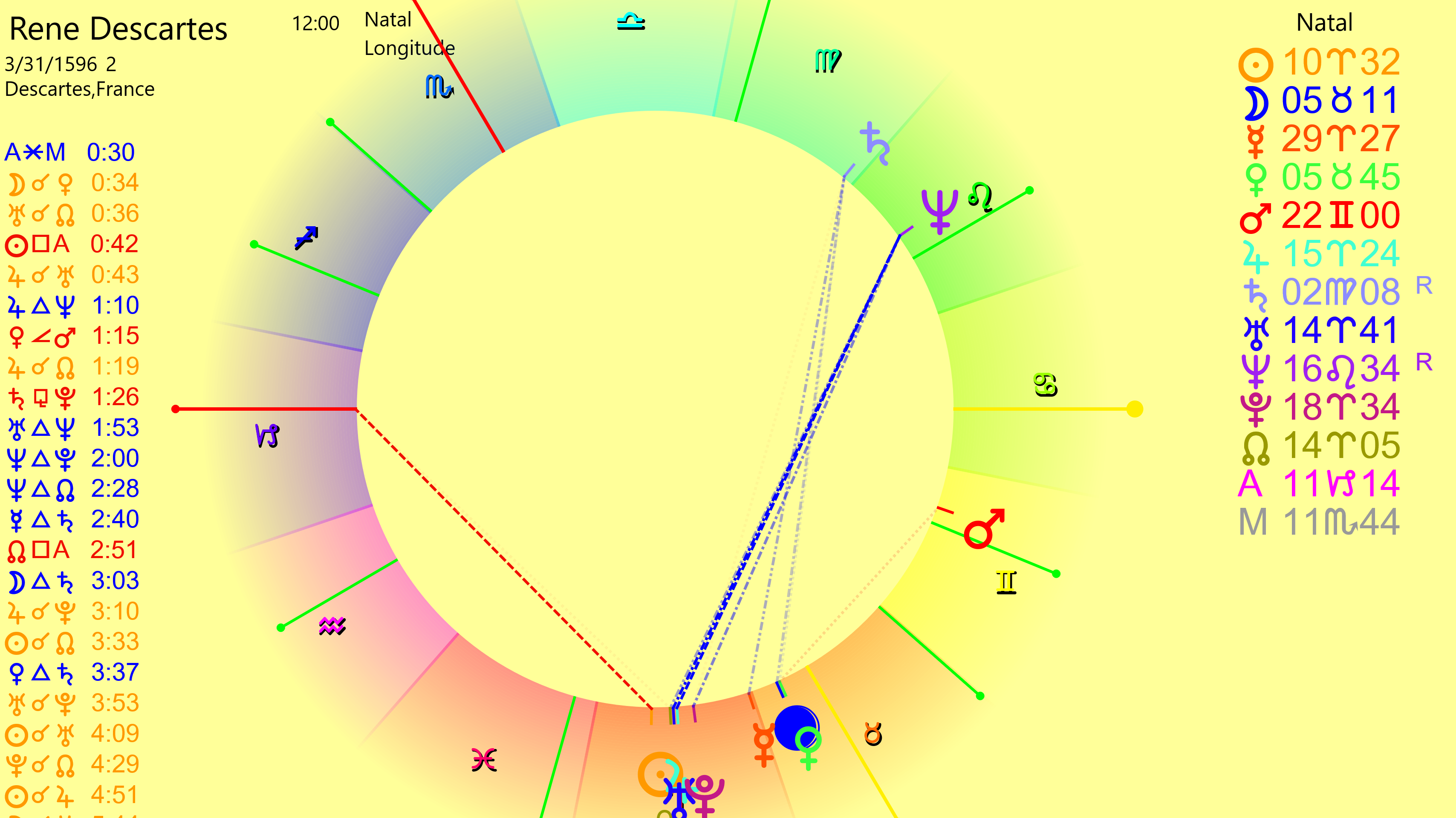
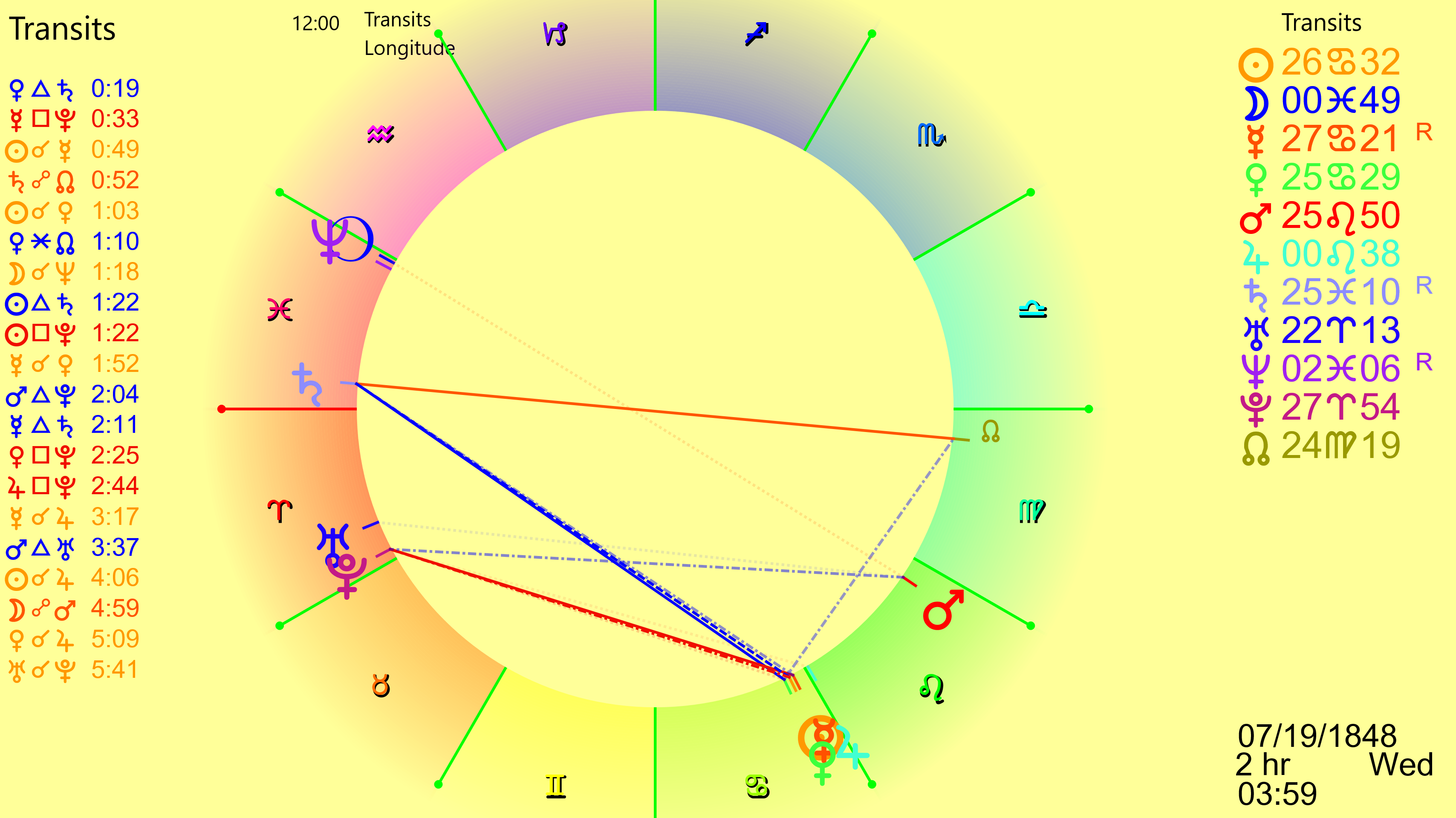
The decade of the Nineties is as important as the decade of the Sixties, but it does not get the mythology of that other decade, possibly because the sound track was not as good. At the time there was even the saying that “The Nineties are the Sixties Upside Down” which was literally true with the shape of the numerals, but also showed some hope among people who said it. This was the decade between the fall of the Soviet Union and the attacks of 9/11. Many conservative pundits complained about Americans going soft without the ‘threat” of Communism to goad them forward, and so were happy with the rise of terrorism marked by the attacks on the World Trade Center, itself a synecdoche for the financial capitalism that was ruling the world, and would make its mark felt in another few years.
The Sixties were marked by the conjunction of the two outer planets Uranus and Pluto, and that conjunction certainly indicated the nature of the decade that the august Trilateral Commission called “too much democracy”. The decade of the Nineties was marked by the conjunction of the two outer planets Uranus and Neptune. Both conjunctions involved Uranus, but the difference was between Pluto in the Sixties and Neptune in the Nineties. So in other words the Sixties was a Pluto decade and the Nineties was a Neptune decade.
Pluto is a more dynamic, transformative planet than Neptune. The previous conjunction of Uranus and Neptune was in the 1820s, thirty years before the conjunction of Uranus and Pluto, so the synodic cycle of Uranus and Neptune is longer than the cycle of Uranus and Pluto at least currently. Pluto has a longer period — 250 years versus 186 — than Neptune, but sometimes Pluto speeds up as it prepares to go inside the orbit of Neptune. Just from the difference of Neptune rather than Pluto in these two different conjunctions, you would expect that the Uranus, Neptune conjunct to be less obvious and abrasive.
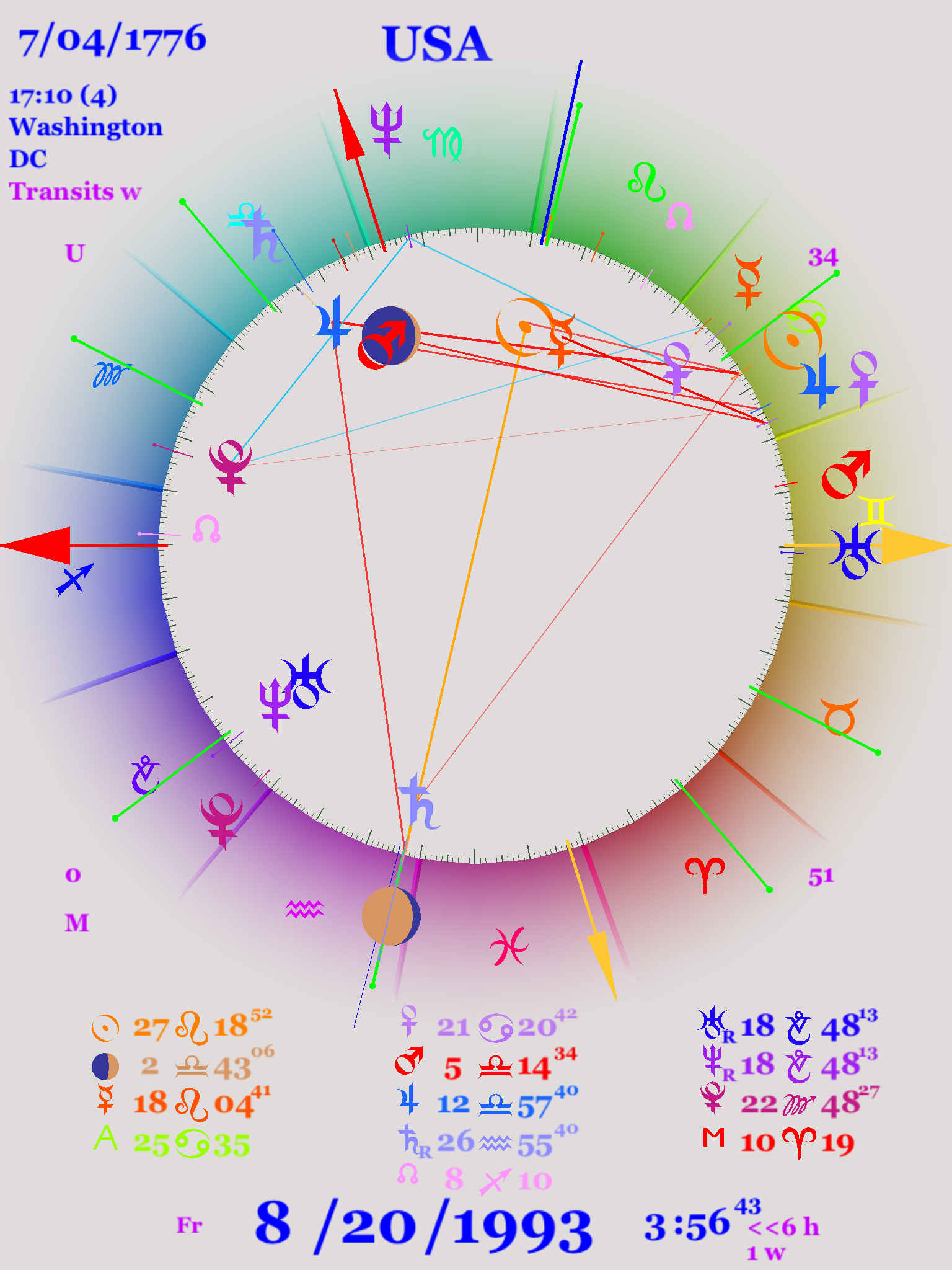
Uranus Conjunct Neptune
There were a few very large changes that happened in the Nineties.
As we’ve seen in the past, hard aspects between Uranus and Neptune can symbolize times of great development of what I call ” electronic drugs”. These are technological objects that can become addictive to many people, perhaps in certain cases more so than commonly thought addictive drugs, with heroin being the epitome. In the first decade of the Twentieth century, with an opposition of Uranus and Neptune, the electronic drug in question was the motion picture, which first became widely and wildly popular in that decade. Then in the decade of the Nineteen Fifties with the Uranus Neptune square the drug was television, which had existed before that decade but became widely and wildly popular during that decade after World War II. Then in the early Nineties we saw the conjunction of those two planets.
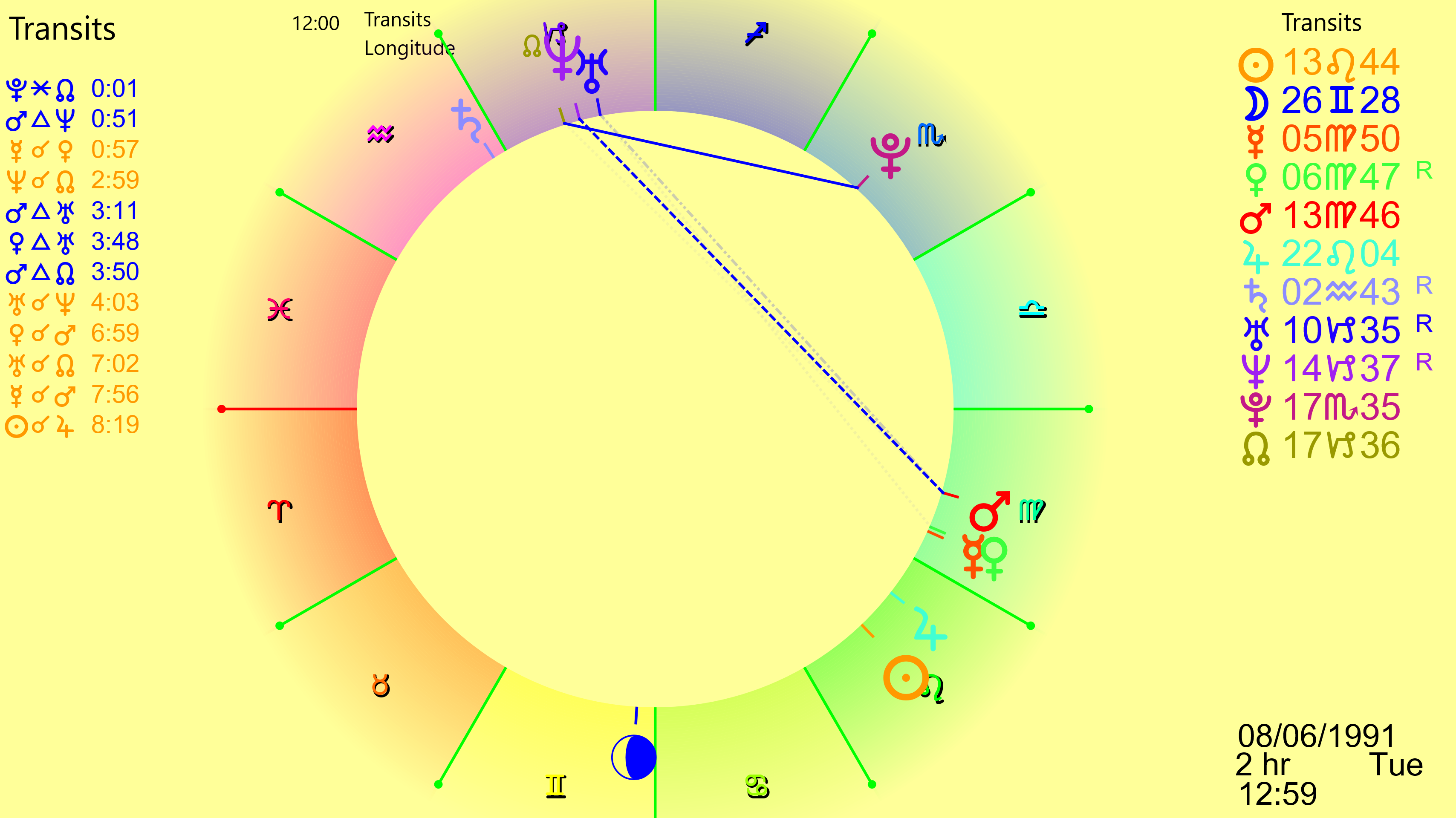
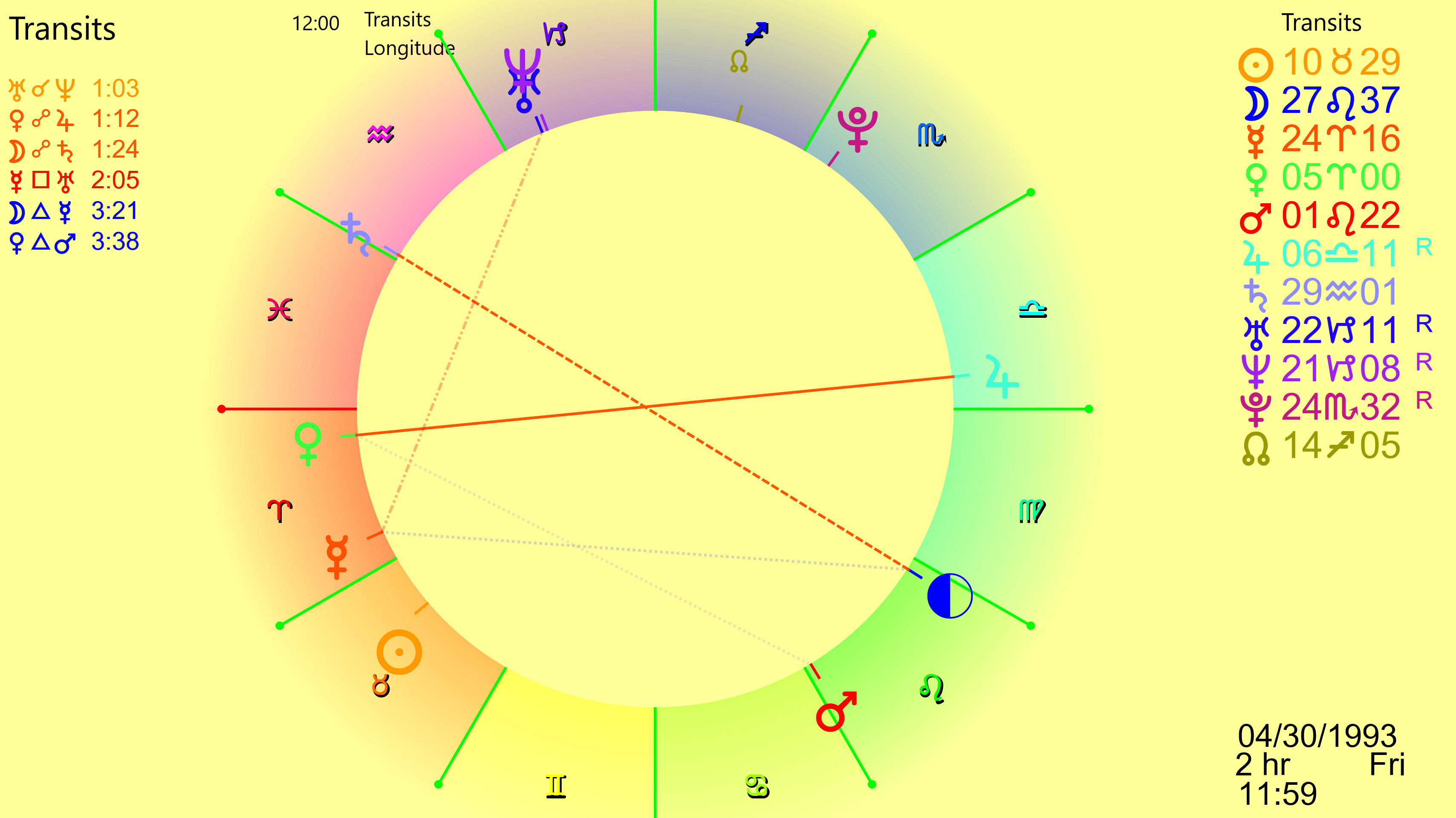
Just as In the Sixties the conjunction of those two outer planets lasted the whole decade and colored it, even though the exact conjunction happened in the middle of the decade, this conjunction happened in the first half of the Nineties and lasted the whole decade and is indeed the keynote to the decade, even though other combinations made their mark. The graphical ephemeris below show the slow moving conjunction of these two planets.
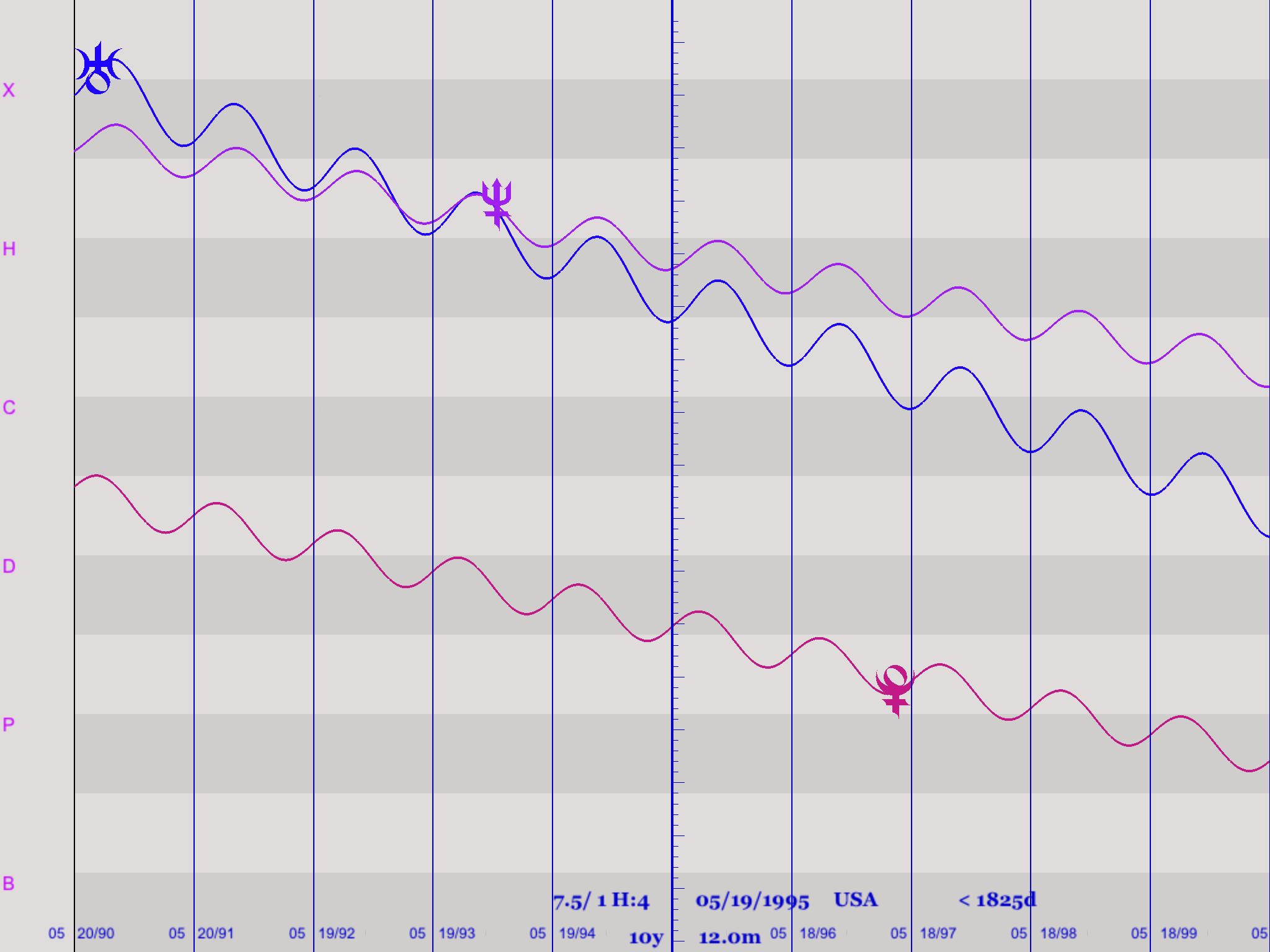
Uranus-Neptune Conjunction of Nineties
This was the decade that saw the rise of prominence of the World Wide Web. Many people conflate the “World Wide Web” with the “Internet” but the Internet has existed for a longer time, and in fact it was a child of the Sixties. A little history of this dominant technology is in order.
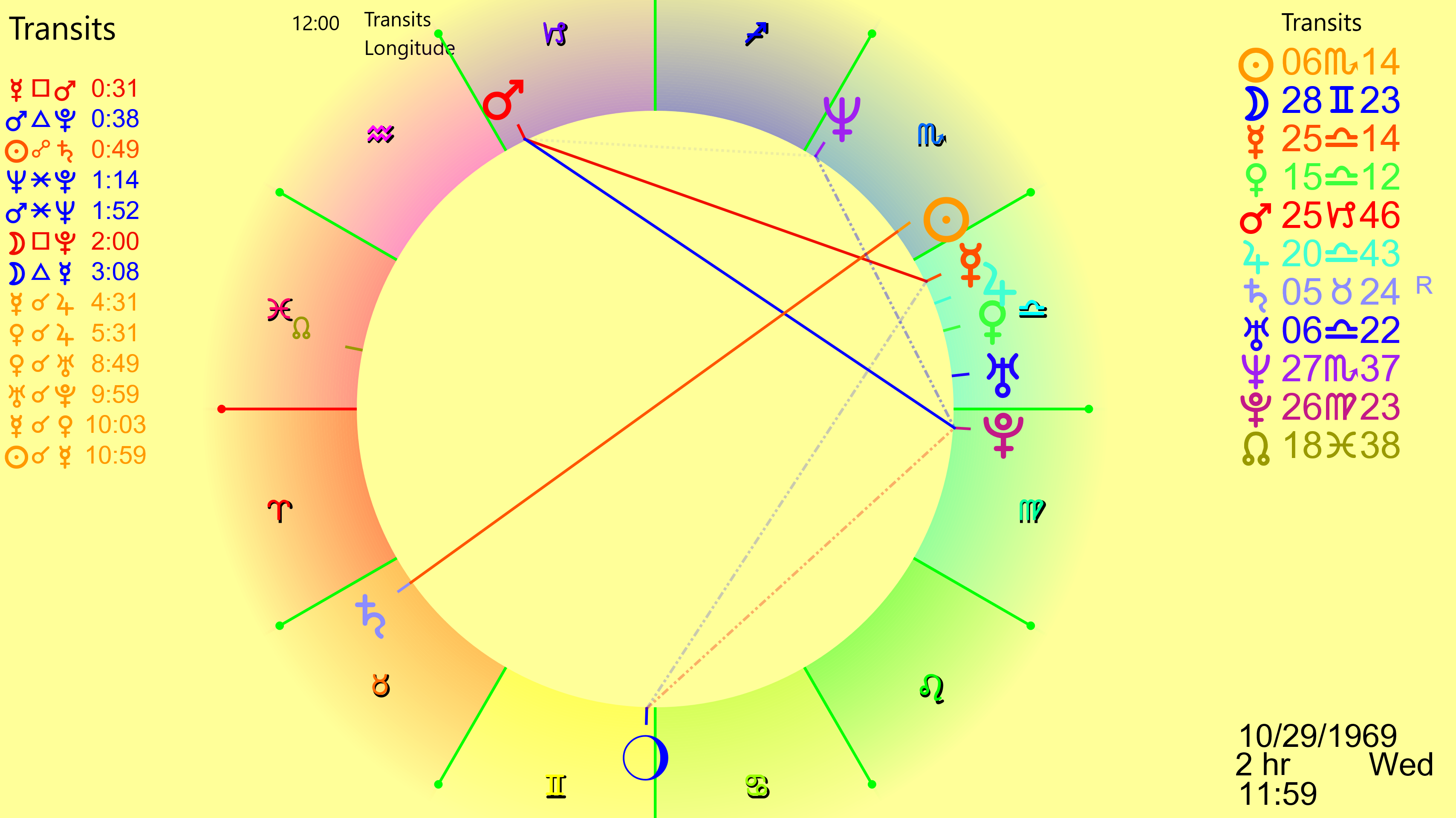
The Internet as a means of communications between two computers was developed during the Sixties, based on progress done during the preceding decades. The first Internet communications, though it was not called that at the time, was between Los Angeles and Menlo Park, in what is now called Silicon Valley, on October 29, 1969. This early Internet had basically two protocols (rules governing transfer of data): file transfer protocol (FTP) which was used to move files between two computers in different locations, and which is still widely used, and telenet, which allowed users to log on to a remote computer and do work. This has been supplanted by secure shell, which allows the same thing but prevents other people from being part of the communication, that is it is secure. I use both of these myself. But as the Internet got older, more protocols were developed. One that was very popular in the Eighties was called gopher, developed at the University of Minnesota whose mascot is the gopher. Gopher allows hierarchical lists, and you could drill down by selecting an items and see what was hidden below. Though rudimentary, it was the same function as what you see on a webpage, but text based rather than graphical.
The basics of what we know now as the World Wide Web, or even, using common parlance, as the Internet, originated in the Sixtes by a philosopher named Ted Nelson. He developed the concept of hypertext. This concept was invented back in 1963 and published two years later. The concept was in the air by the Nineties and this important conjunction. Hypertext was the concept that certain key words should point to a definition and elaborations of those words, that is could be a link. But at the time it was difficult to successfully implement because of the nature of printed books. At the time Project Xanadu was developed to show the properties of hypertext, but it was not until the development of the World Wide Web, created by Tim Berners-Lee and others, that hypertext became something that is used daily by a significant proportion of the world’s population. If you notice the beginning of a address at the top of a browser, you will see “http:” (or https: for secure); this stands for HyperText Transport Protocol. Berners-Lee laid out his vision in May of 1989, but it wasn’t until August 6, 1991 that he announced the results of his work to a news group. It developed slowly at first, with there being 50 web servers in the world in January 1993; this increased dramatically so that by October of that year there were 500 web servers. That number has grown exponentially in in the quarter century since then.
The Fall of the Soviet Union, on December 25, 1991, was one of the major events of the Twentieth Century. The leader of the Soviet Union at the time, Mikhail Gorbachev, said something to the affect (addressed to the United States) that my country will do something profound to the United States, we will remove your enemy. And in fact, for a time, the fall of the Soviet Union did just that. Ever since President Woodrow Wilson sent American troops to intervene in the Russian Civil War after the fall of the czar, America had been guided by a fear of Communism and the Soviet Union. After World War II and the start of the Cold War, the threat of Communism proved to be a large boost for defense industries which made enormous sums of money by building weapons for the United States, many of which actually worked. And the Soviet Union and its Communism also served as a warning about the dangers of socialism, which never had the following in the United States that it did in, for example, European countries. But the Soviet Union also served as a goad to the United States to clean up it acts, for example in the US’s overt racism, so that the country could serve a a better model of third world countries than the Soviet Union. Historian Gordon Woods suggests that the arrival of the new revolutionary government of the Soviet Union was difficult for the US since it had always considered itself the exemplar of Revolution, and was not happy with an upstart stealing the mantle from them. But after the disappearance of a country that has been so important in the Twentieth Century, America was a bit lost without enemies. At first, the scourge of Drugs was seen as a replacement of the missing Communism. But that did not last long, since drugs weren’t quite as fearsome. Then, after 9/11, the threat of Terrorism took center stage. That seemed to be better adversary than drugs, but still the fight against the International Terrorism Conspiracy didn’t require so many big weapons from defense industries as in the old Cold War. But after the replacement of Washington’s man in Moscow, Boris Yeltsin (resigned December 31, 1999), with the nonalcoholic Vladimir Putin, things changed again. Putin began to be demonized incessantly by the West, and it was thought that new military weapons needed to be built up for an oncoming war with Russia.
The beginning of this period, “the End of the Cold War” saw a tremendous change in the US government (by which I mean what was once called The Establishment, the people both inside and outside of government and its intelligence agencies, who shape what good people are suppose to think). Now America was indisputably Number One. And the country was going to take advantage of it . There was a change: NATO — the unofficial arm of American empire — expanded, despite a pledge to Gorbachev that this would never happen, to include a dozen more countries, including those that had been in the Warsaw Pact — the opposite number to NATO — and countries associated with the Soviet Union, and also countries that had been split from the Soviet Union when it fell. Now the United States and NATO felt confident to take on all comers.
The Eighties – the previous decade — saw the rise of Neoliberalism and the Age of Reagan. It was a program that was mostly adhered to by the Republicans. But the Democrats — the other dominant political party in the United States– were not fully on board. That changed in the decade of the Nineties. President Bill “Slick Willie” Clinton became President as a Democrat in 1992 and influenced the shape of the Democratic Party in the years — and decades — following. Bill Clinton (along with his “Coequal” president Hillary) became the dominant force of the Democratic Party, and strongly influenced those who came of age as Democrats of the Nineties and the first decade of the next century. Clinton’s idea was “triangulation” (also know as the third way, again stressing the number three). This concept was that we should have a policy that is neither right nor left (two opposing poles) but rather a third option that is distinct from the two. One is reminded of the old Texas aphorism that the only thing in the middle of the road is a dead skunk. But that became the dominant paradigm for the Democratic Party at least through the Obama Administration.
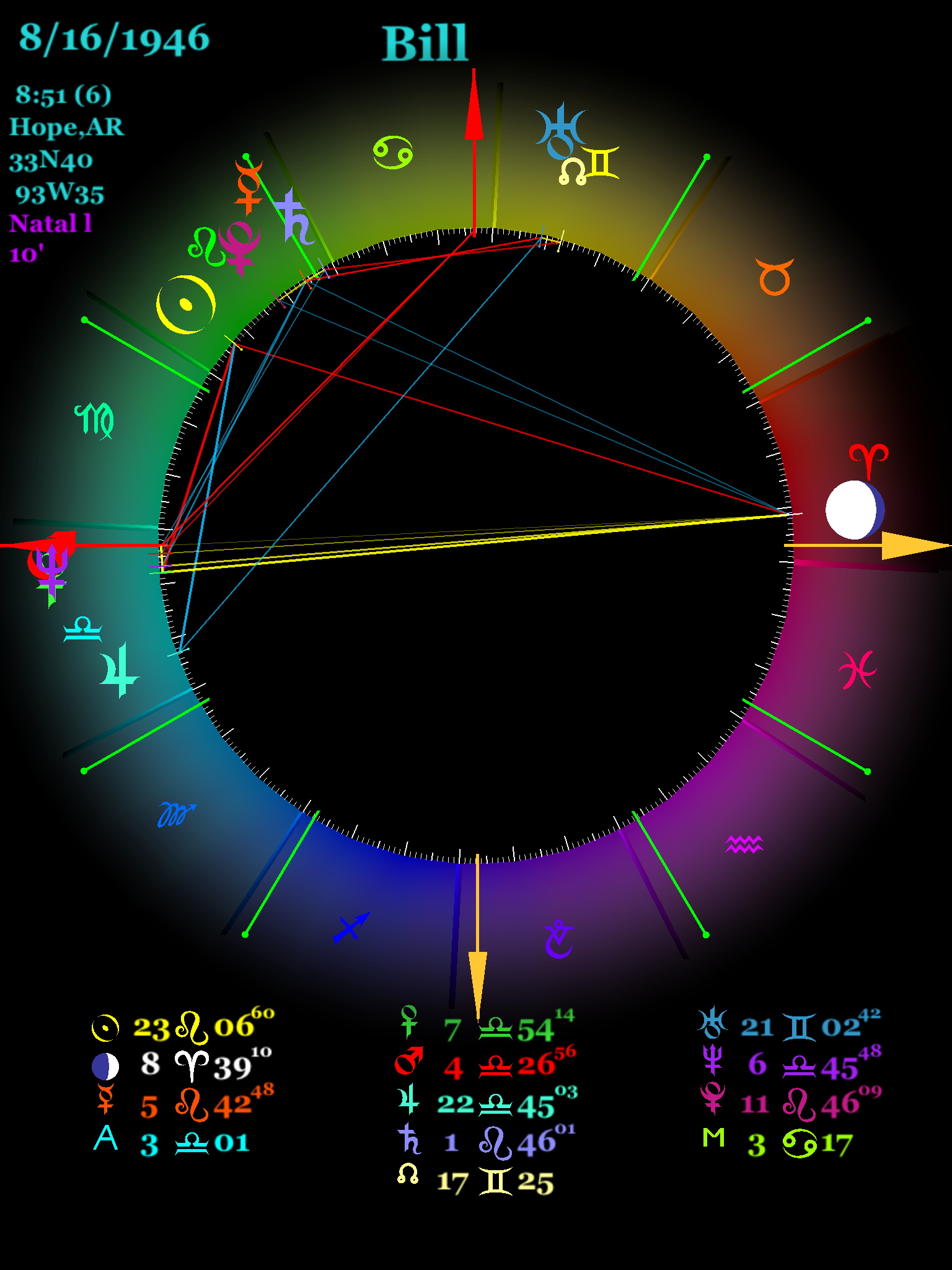
Bill Clinton
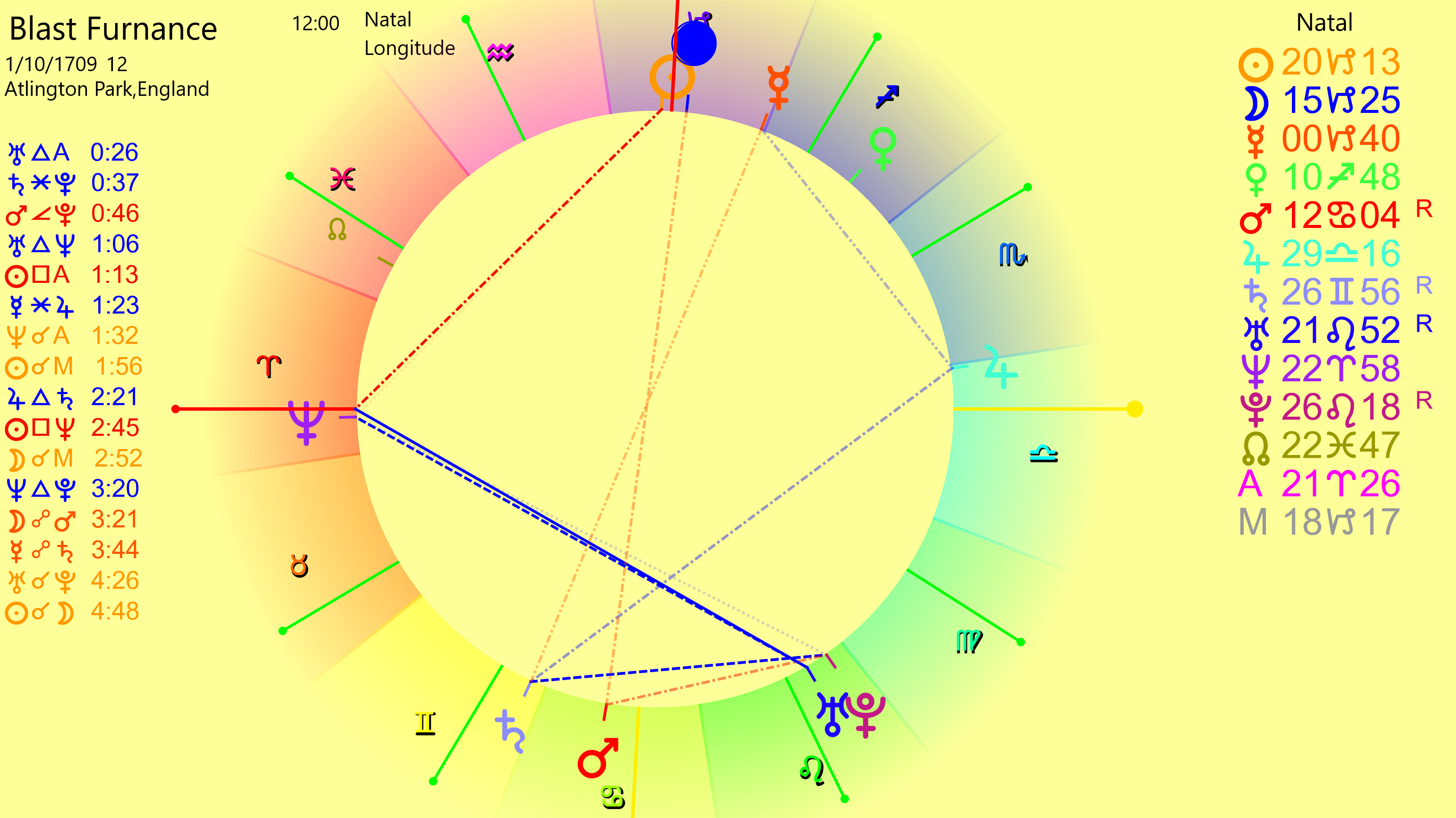
Bill Clinton was a dominant personality in the Nineties, and a brief glimpse at his chart is warranted. A most prominent feature of his chart is the triple conjunction of Venus, Mars, and Neptune at the Ascendant. Venus Mars conjunctions can be read simply as sex, and this President was well associated with sex in the Nineties, as well as before and even now, with his connections with financier Jeffery Epstein. But the Neptune is there also, making him the perfect representative of a Neptune-soaked decade. Neptune can also be associated with the word “slick”.
Since the World Wide Web was invented in the early Nineties, commerce followed the lead and took advantage of the Web to start new businesses. It seemed for awhile there that every new business had “.com” in its name. At the end of the decade the inevitable shake out occurred with the “Dot com” bust which happened in the year 2000. This financial meltdown was typical of the financialization that was characteristic of the Nineties.
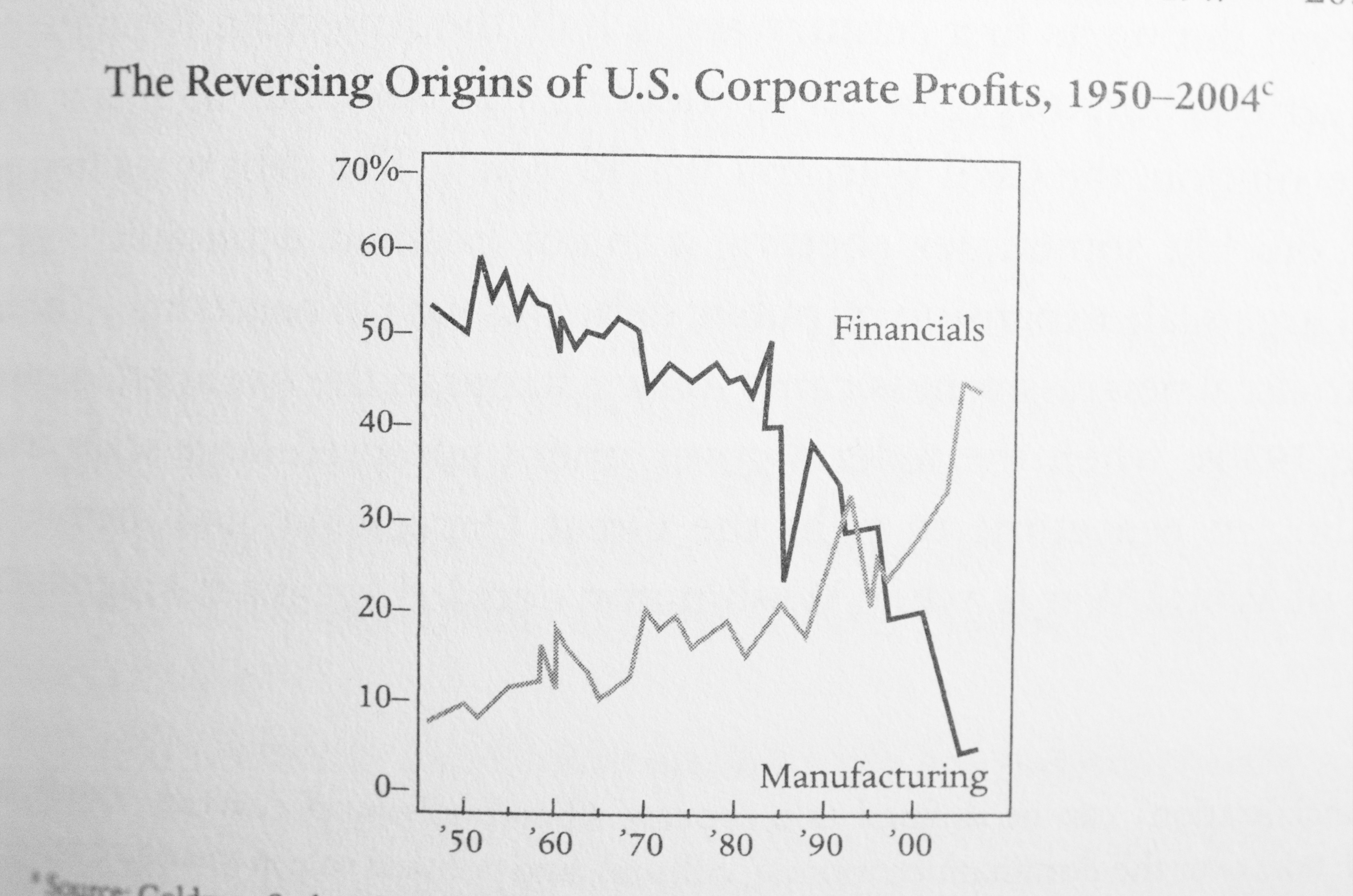
Neptune was involved in this primary conjunction of the Nineties, and Neptune was certainly indicative in the speculative bubble that took place in the financial industries. During this decade the money made from finances surpassed for the first time in history the money earned from manufacturing. One could tell that the reign of FIRE – Finance, Insurance, Real Estate — had truly come to ruled the roost. This allowed some people to became very rich, and as a consequence, many people poor. The graph above illustrates this.
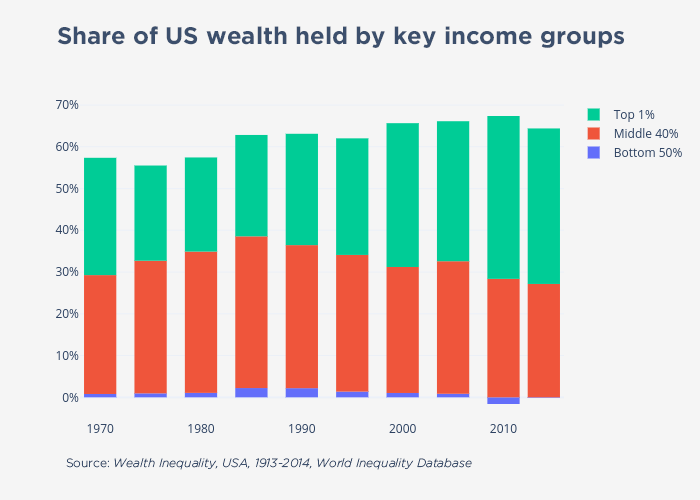
The effects can be seen in these two graphs.
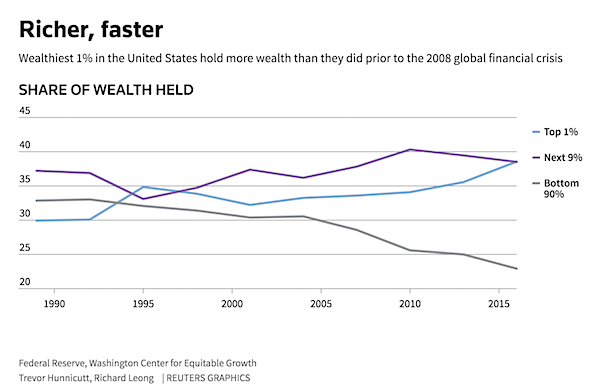
From this first graph, we can see that the wealth of the top one percent grew fast in the early Nineties, so much so that the share of wealth of the next 9% fell temporarily. And of course the share held by the lower 90% fell during that period and continues to fall. The second graph emphasizes what is shown in the first, that the share of wealth owned by the upper one percent took off after the Nineties. One can see why people in the bottom 90% were increasingly angry.
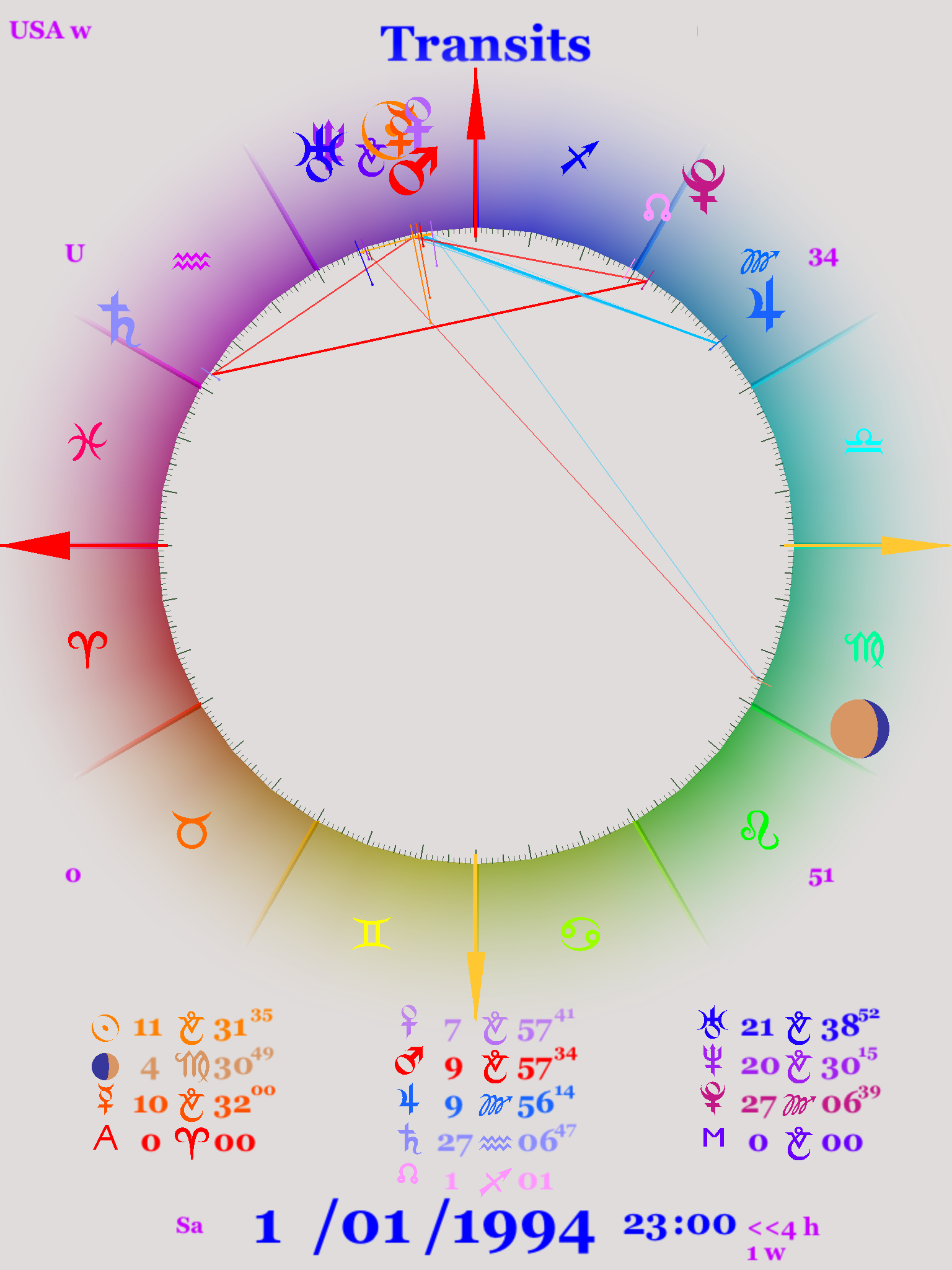
Another important event of the Nineties was the Rwandan Genocide, which began in April 7, 1994. It had been preceded by an exact Saturn-Pluto square in January of that year with Mars at the midpoint of those to planets and semissquare both of them. This was just as the Uranus-Neptune conjunction was separating for the last time. Between a half and one million people were killed in 100 days.
Rwandan Genocide
As a result of this genocide, which the President of the United States and many of his government were upset that they could not prevent, the US intervened in the Serbian civil war at the end of the decade, claiming they were preventing genocide, thus reinvigorating the American need to intervene in the affairs of other countries and also destroying one of the last Communist states in Europe. This intervention set a good precedence for the upcoming Bush administration of the next century.
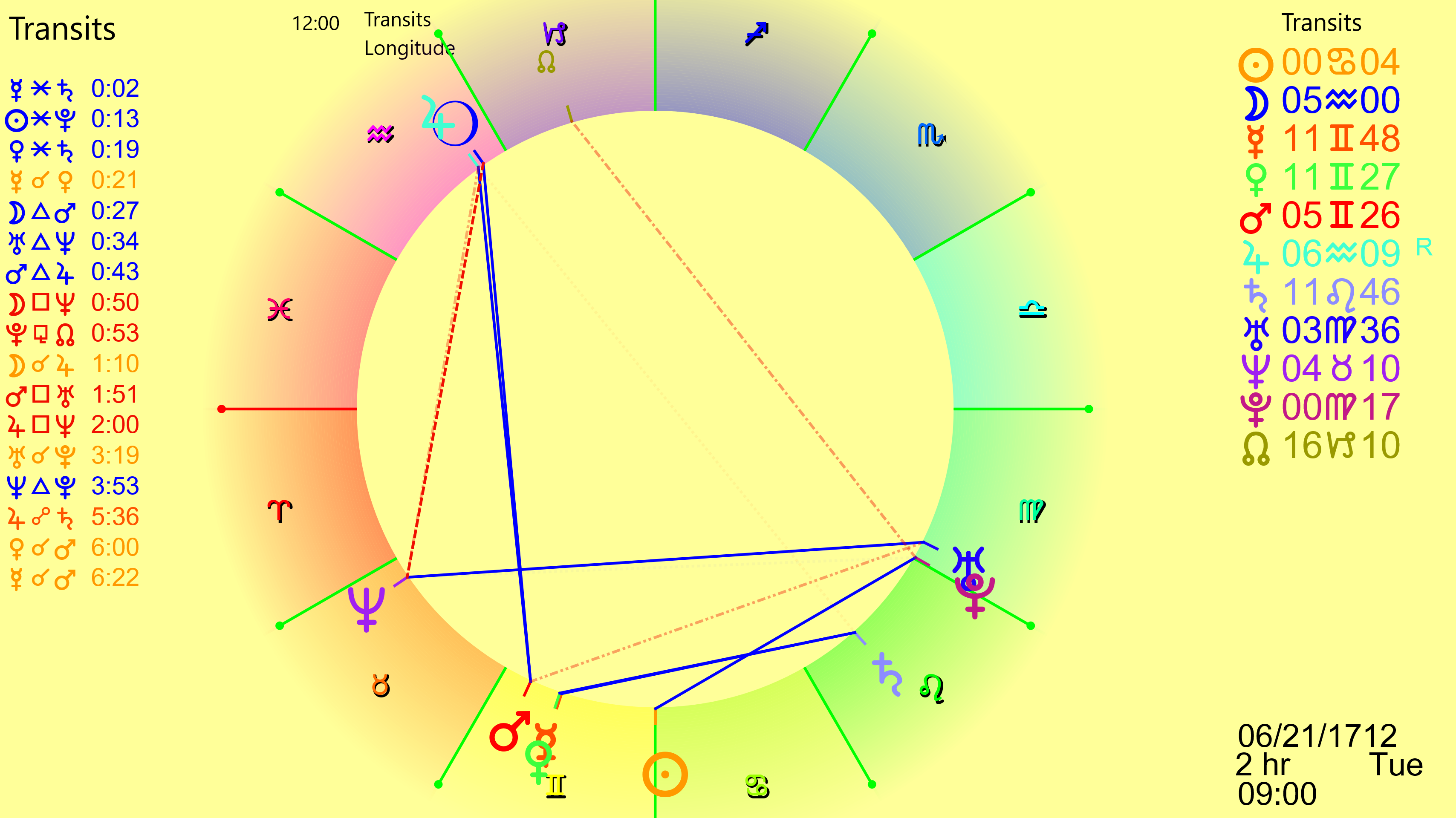
By the Nineties the cell phone had been in existence for several years — the first cell phone call was made on April 3, 1973 (under the Uranus-Neptune closing semisquare) and had gained popularity in the Eighties, but were still large and very expensive, not something that most people had. In the early Nineties the second generation of cell phone technology (2G) was developed, and along with that what could be called the first smartphone, the Simon from IBM, became available. This was a combination of a cell phone and a Personal Digital Assistant (PDA) which was a small hand held computer. The Simon sold well, considering its price and size. The Simon was first announced at the Las Vegas computer trade show COMDEX on November 23, 1992.
As the world entered the Twenty-First Century, it saw that the Soviet Union had broken into several countries none of which were Communist, the World Wide Web had grown increasingly widespread and popular, the smartphone had come into existence, and financial capitalism became the dominant way of making money.