The invention of the movable-type printing press — even though similar devices were used in China many centuries earlier — was an extremely important development for (western) civilization, allowing for the transmission of information easily between different people and cultures. Previously all books had to be written by hand which limited the number of copies of a particular book. Five hundred years later the development of the Internet was also extremely important, for both good and bad, for world civilization, allowing information to be quickly transmitted between people and allowing opinion to be expressed by anybody and transmitted to anybody, eliminating the grasp of authorities of information.
Before the printing press existed, information had to be written by hand. While this allowed beautiful manuscripts to be created — for example the Book of Kells from Ireland — it was difficult to create many copies of one manuscript. Important in the Christian West, there were a limited number of translated Bible in existence and those were only available to church authorities; thus the common folk had to take the word of the authorities on what the Bible said. Thus the commoners (the Uranus Class of the time) were under the control of the authorities. Same as it every was.
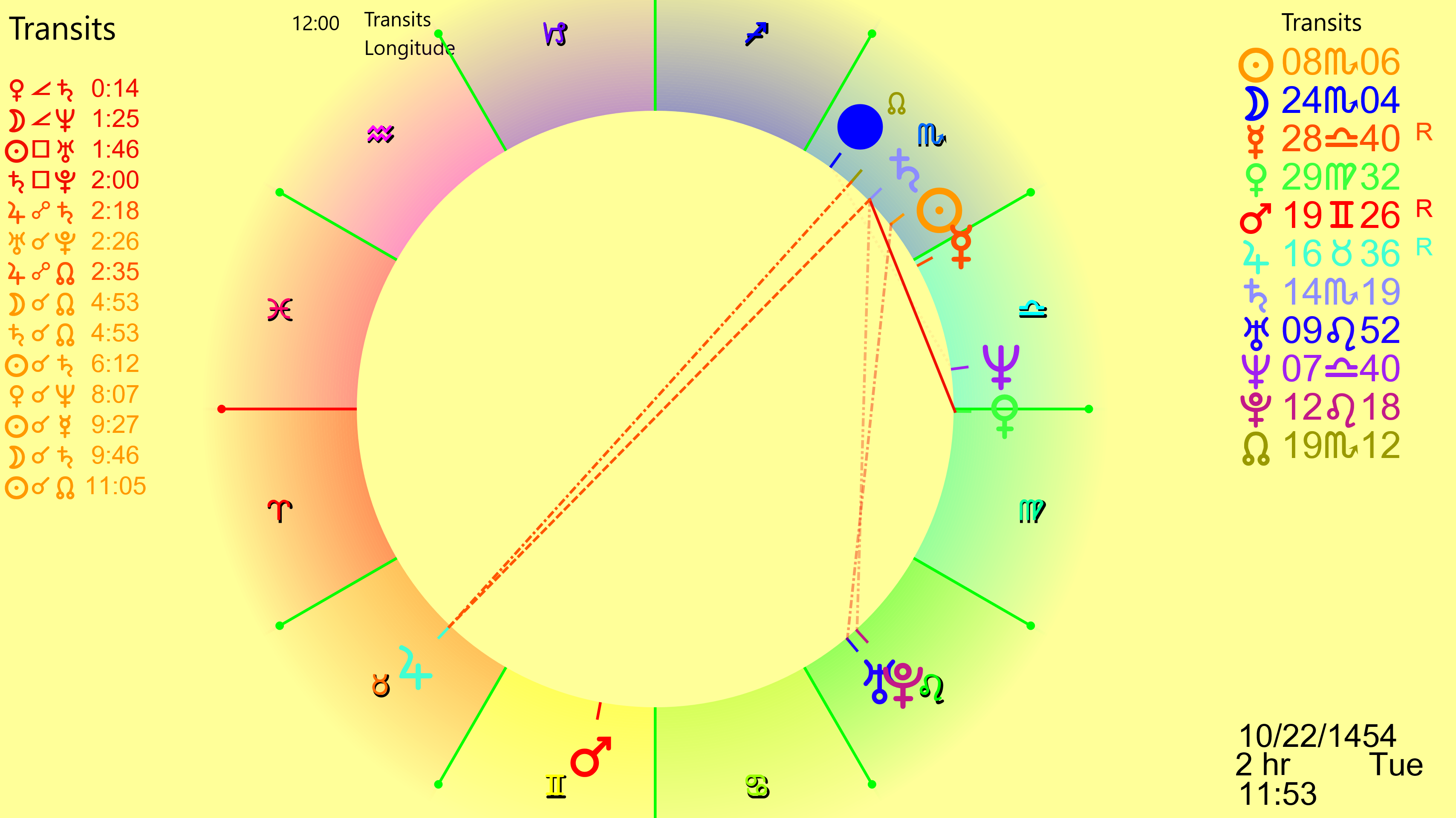
First Dated Printing
When the invention of the movable type printing press by Gutenberg actually happened we don’t know for sure but it appears to be around 1450. There was no astrologer around to record the time something was first printed, and the development work was years before. However we do have the date when the first real item was printed (a 31 line Indulgences list) — 10-22-1454. Then the Gutenberg Bible itself was printed, the next year: 2-23-1455.
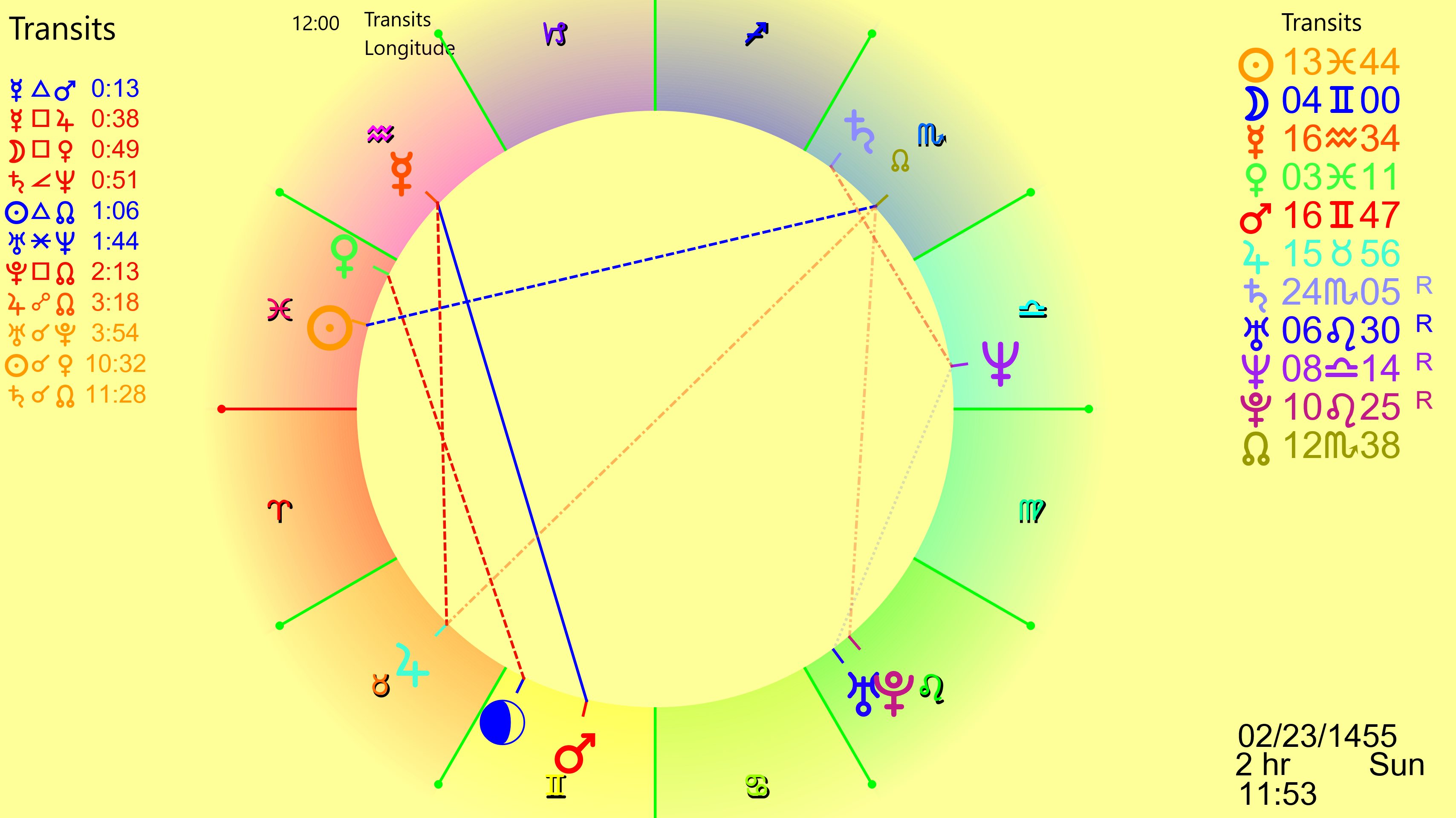
Gutenberg Bible
From these two charts we see that there was a recent Uranus-Pluto conjunction. Printing did not become popular and spread to other countries until the Uranus-Neptune conjunction some twenty years later.
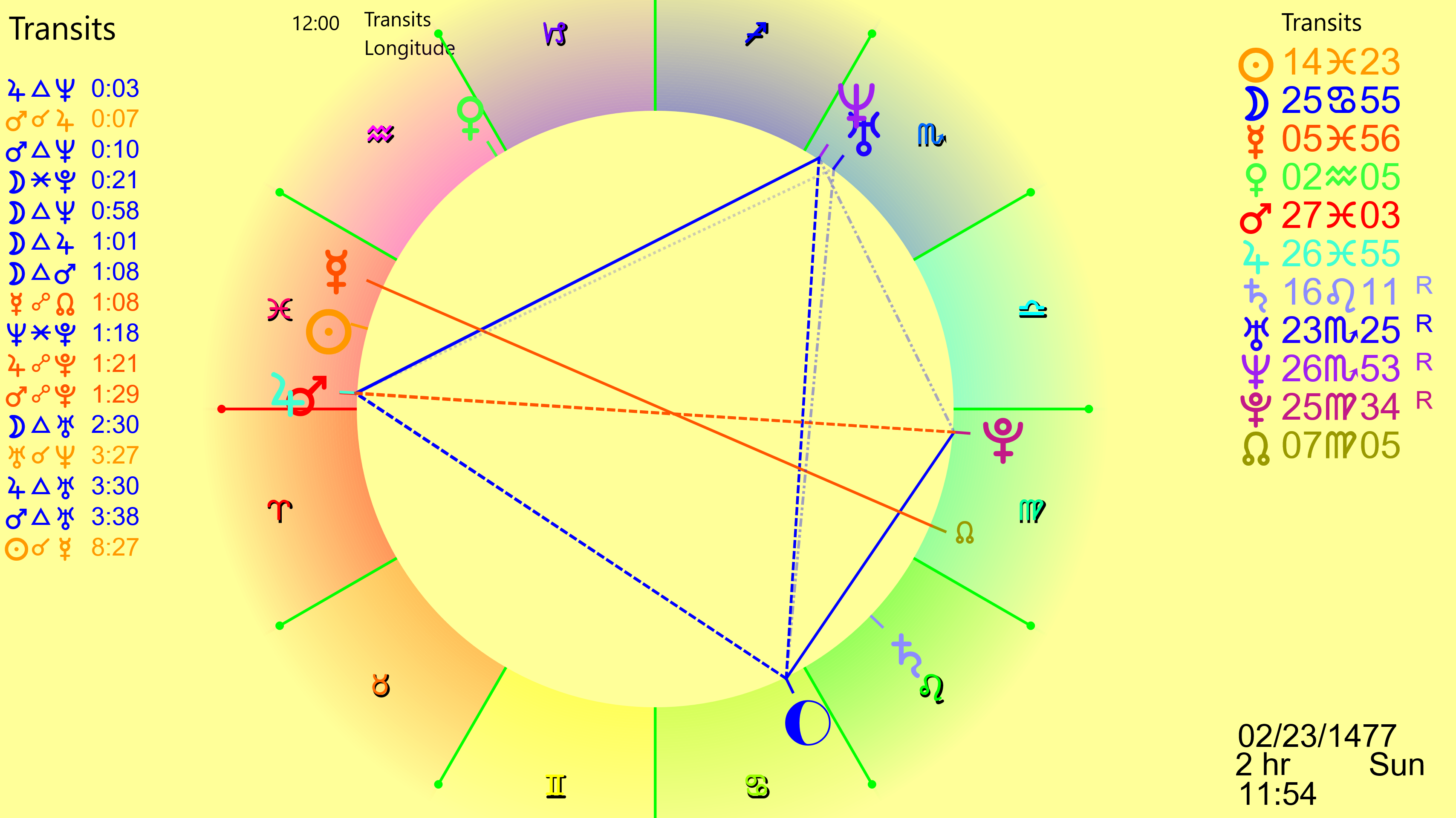
Uranus-Neptune Conjunction
The first Internet transmission was on October 29, 1969 from Menlo Park (in Silicon Valley) to Los Angeles. The needed development for this first transmission was created over the preceding years. The Internet did not become extremely popular until the development of the World Wide Web during the following Uranus Neptune conjunction a quarter century later. The so-called “World Wide Web” was first announced by a British computer scientist Tim Berners-Lee in 1991; the first web page was available in 1993. Looking at the two chart for these events we see that Uranus was conjunct Neptune both times.
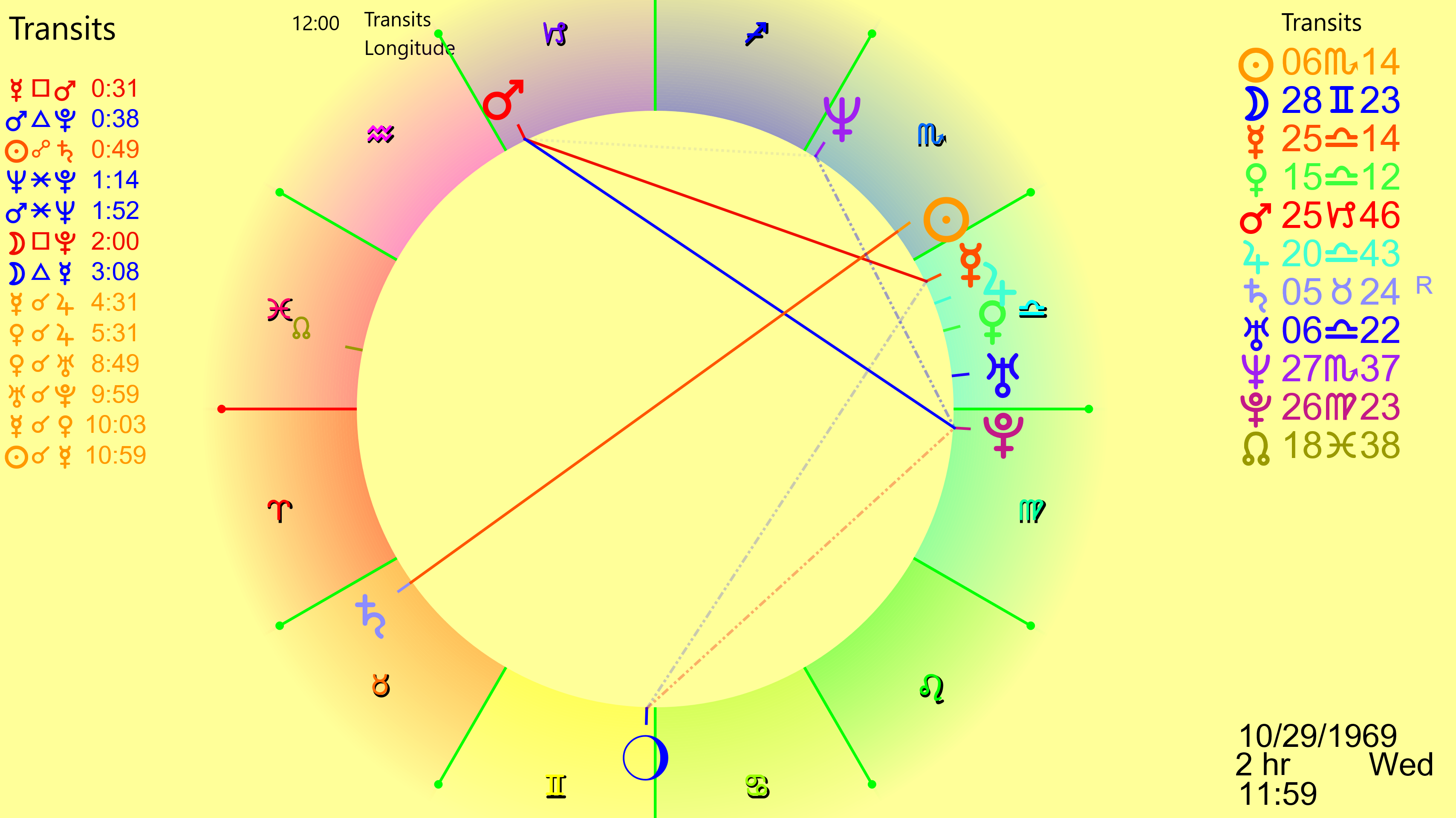
First Internet Transmission
The Internet has also been called DARPANet since it was created by DARPA which was a military research and development group which was created, shortly after the first artificial satellite — Sputnik I — was launched, by the President who warned about the military industrial complex.
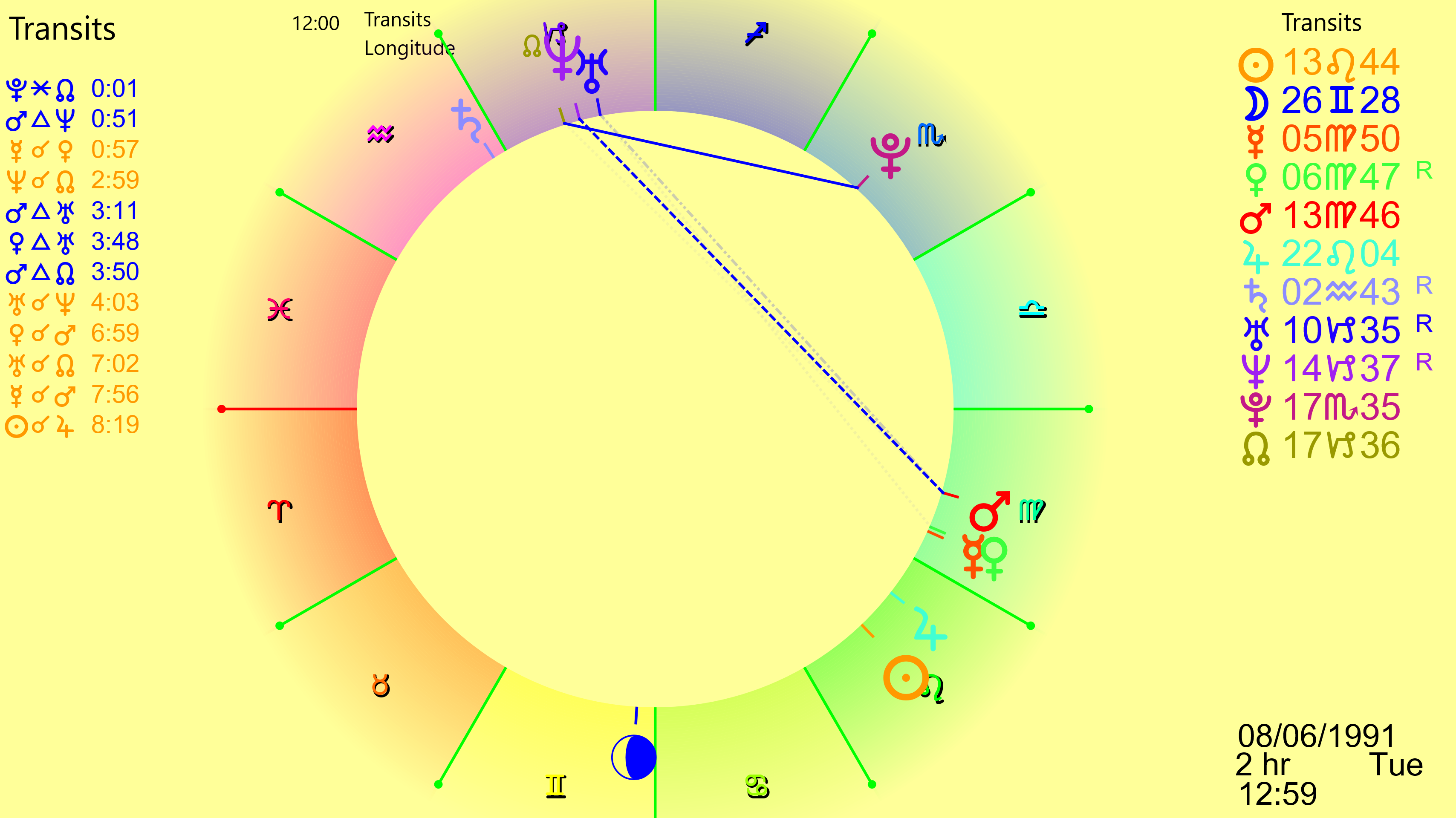
Web Introduced
This early Internet, mostly used by the military and academic people, allowed transfer of files to remote locations (FTP) and the ability to work on a remote computer (Telenet). A short time later a protocol called Gopher (developed at the University of Minnesota whose mascot is a gopher) was introduced. The was sort of a non-graphical Internet browser, where you were presented with a list of links; if you choose a link you are taken to the lower level where there is also a list of links. Similar to a browser in action but with no graphics or text.
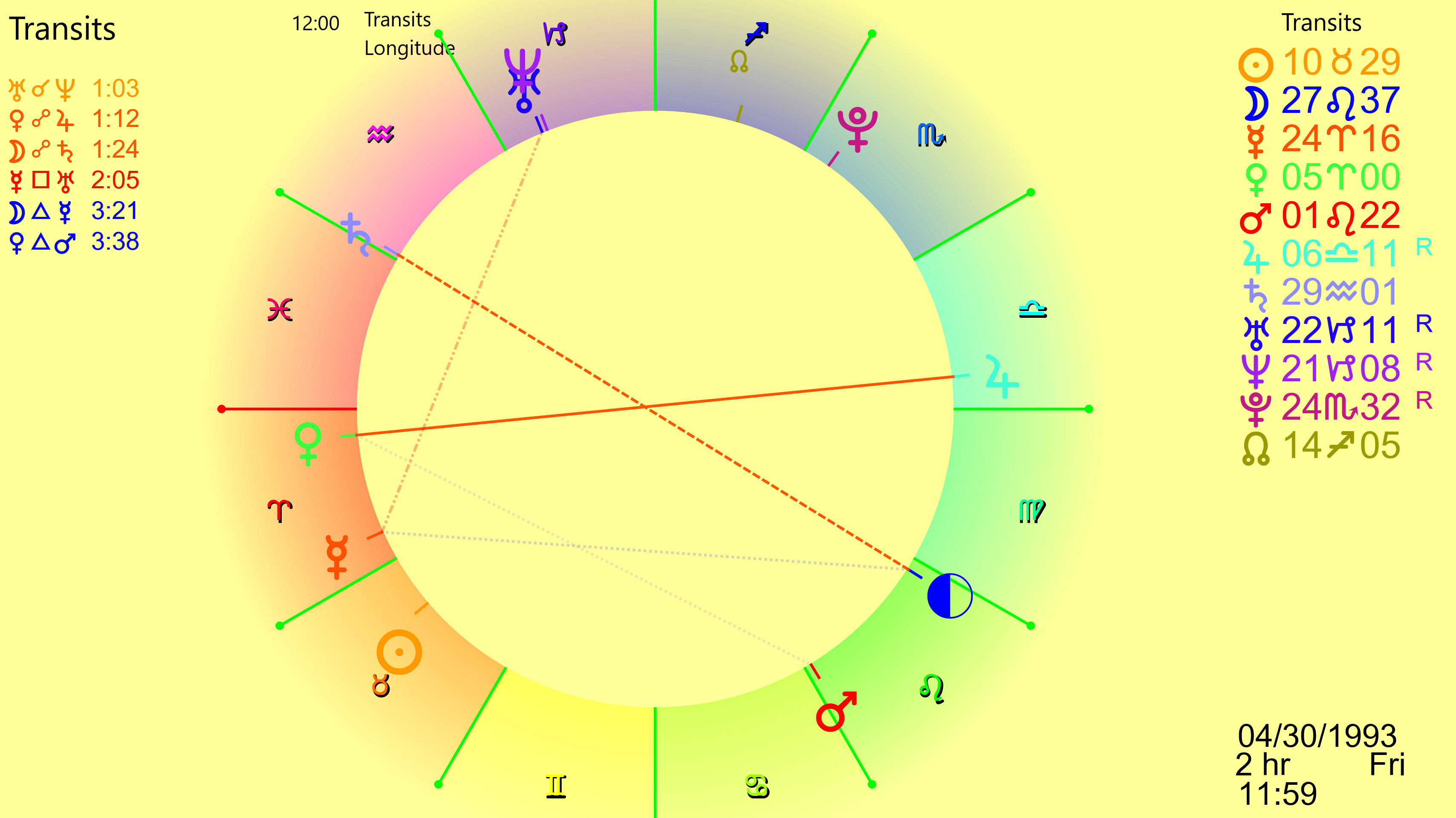
First Web Page
I wondered what happened at the Uranus-Pluto conjunction half way between those two events. Since Pluto speeds up and slows down more than other planets the cycle of Uranus conjunct Pluto is not regular. Halfway between those two date was 1711. The event that happened was the beginning of the Industrial Revolution.
Sources are vague about when the Industrial Revolution started except to say it started in the Eighteenth Century. More clear is when the IR arrived in America, bought by Samuel Slater in 1790. Since Britain refused to allow its industrialism to be exported to America, Slater memorized ideas while in England and brought them back to America.
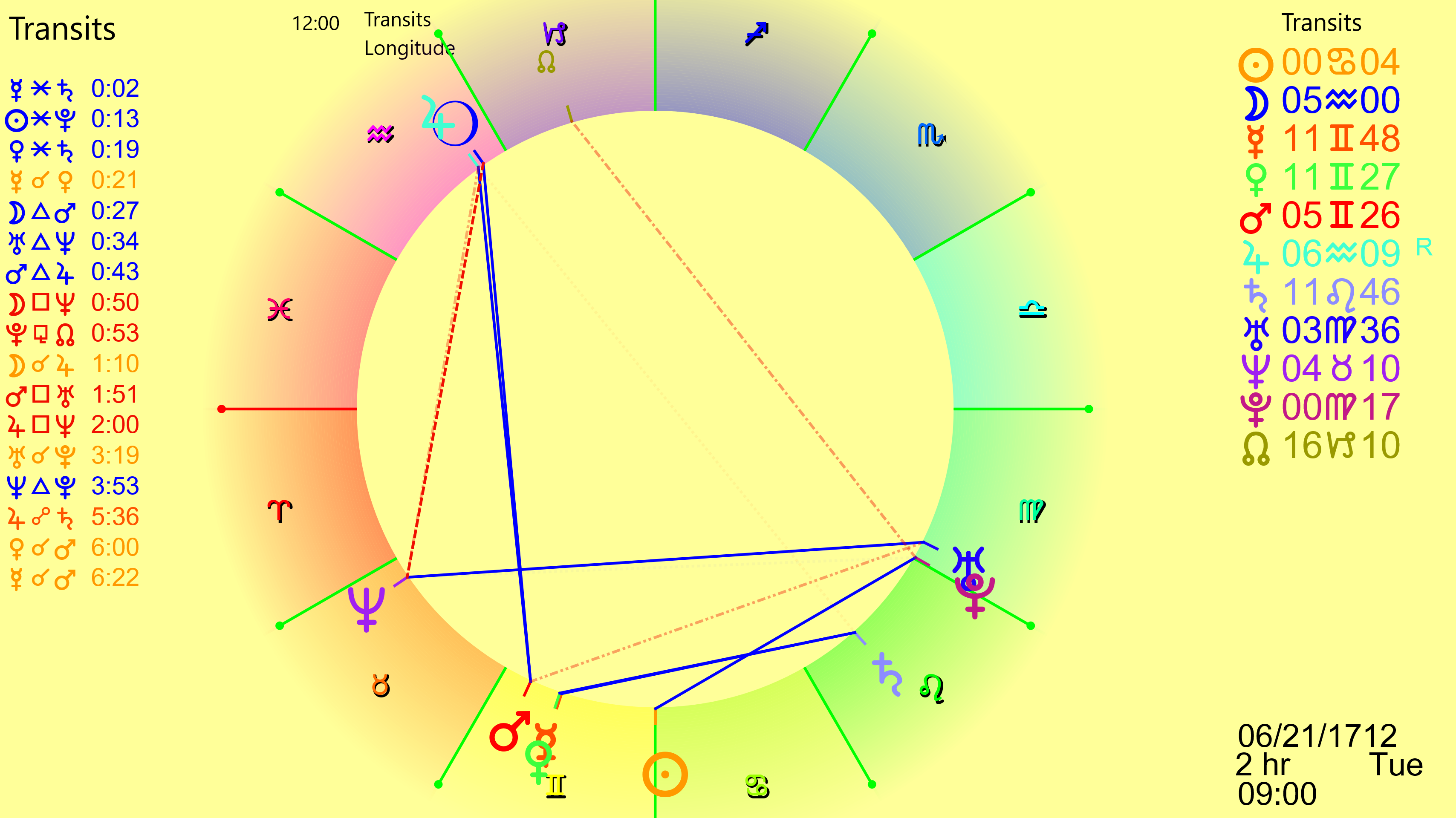
Newcomen Steam Engine 1712
One of the markers of the Industrial Revolution was the steam engine. While steam engines had existed as long ago as Greek civilization, the Newcomen steam engine (invented by Thomas Newcomen in 1712) was the first one to allow real work to be done, such as pumping the water out of coal mines. When James Watt improved the Newcomen steam engine and made it more efficient he got all of the recognition: Very few people have 40 Newcomen light bulbs in their possession. Another important invention was by Abraham Darby. He developed a method of creating steel from coke (a fuel derived from coal) rather than from coal thus allowing easier production of steel, certainly a backbone of the modern industrial world.
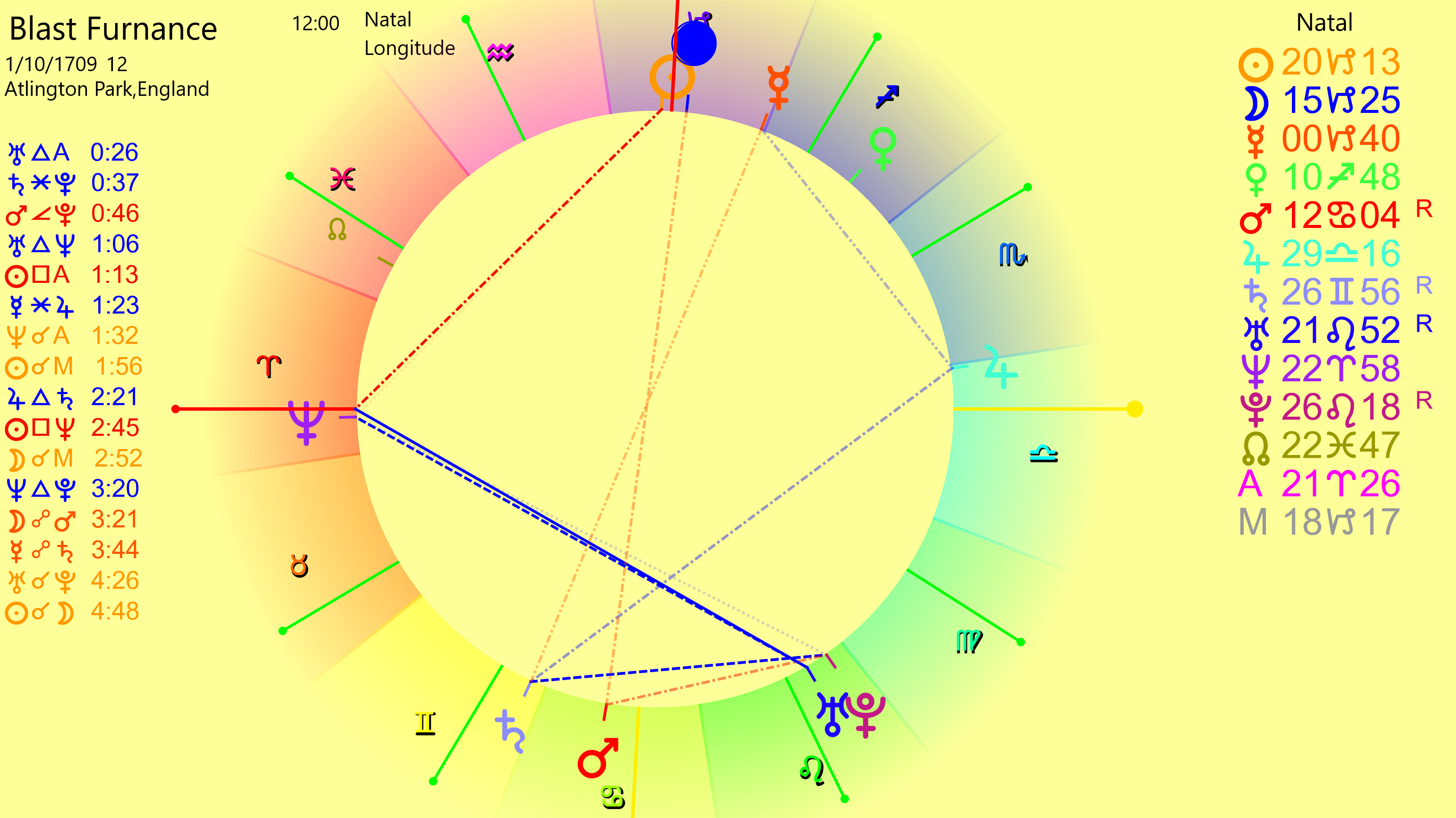
First Blast Furnace
While there is no date for this invention, there is a date and place for the first blast furnace using this technology from Darby.
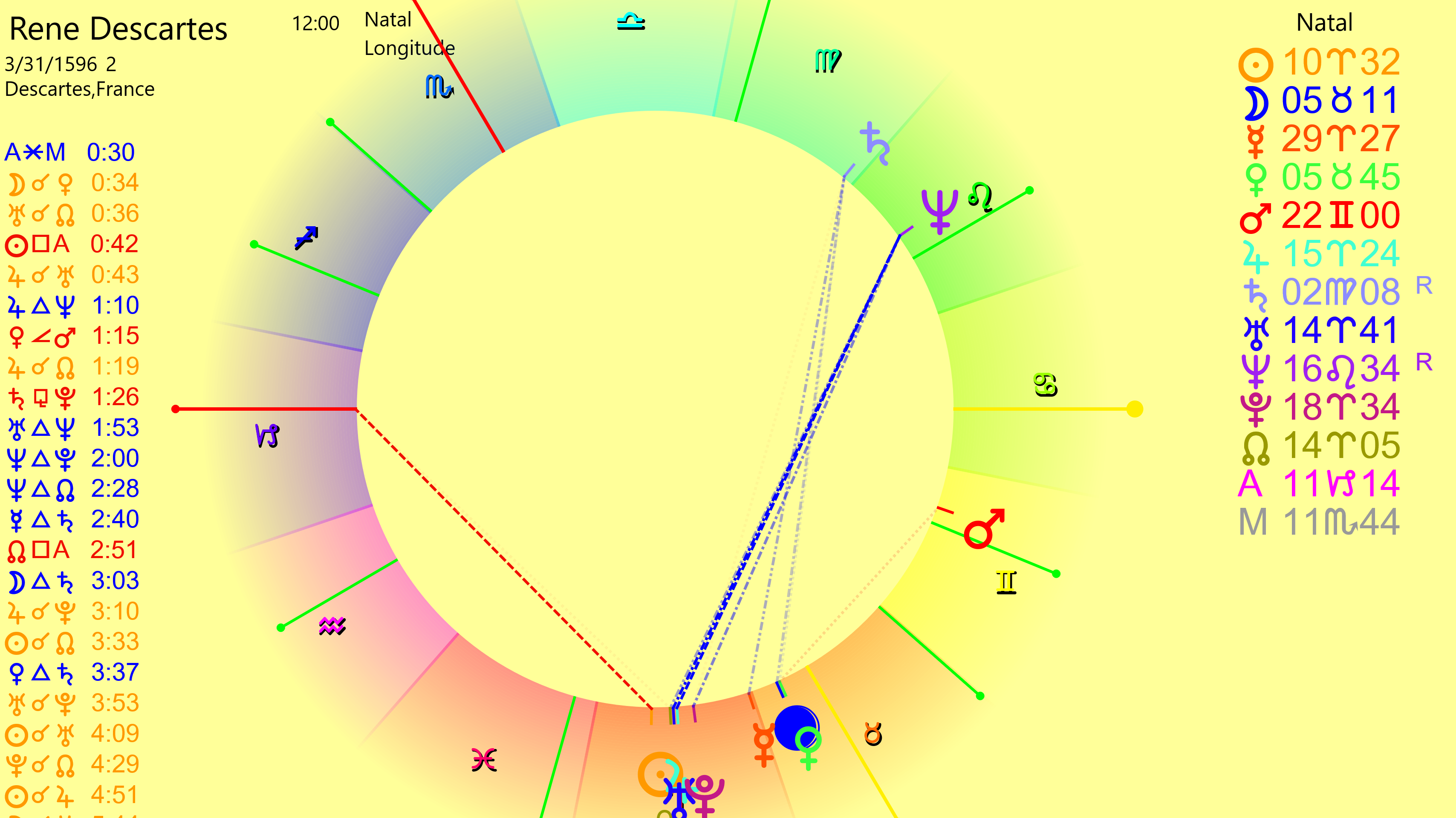
Descartes
The Industrial Revolution, where machines started to be used at a greater scale than ever before, along with the Scientific Revolution and the Work of Rene Descartes (born under the Uranus Pluto conjunction of 1596; that conjunction was on his Sun) gave rise to the belief that humans are machines. This foreshadowed modern medicine that treated the body as a machine, and a approach to Nature that treated the world and all its components as parts of a machine. It started the process of the Artificial replacing the Natural: Artificial lights, artificial horses, artificial immunity, and the final insult artificial intelligence. There is no place in the world anymore for the natural. We — meaning humanity — have technology and so there are no more limits! Welcome to HyperModernity.
Now that the printing press has been superseded by the Internet, we find that more and more people can’t or won’t read. We are moving into a post-literate world, where people would rather scroll their smartphones than read text.
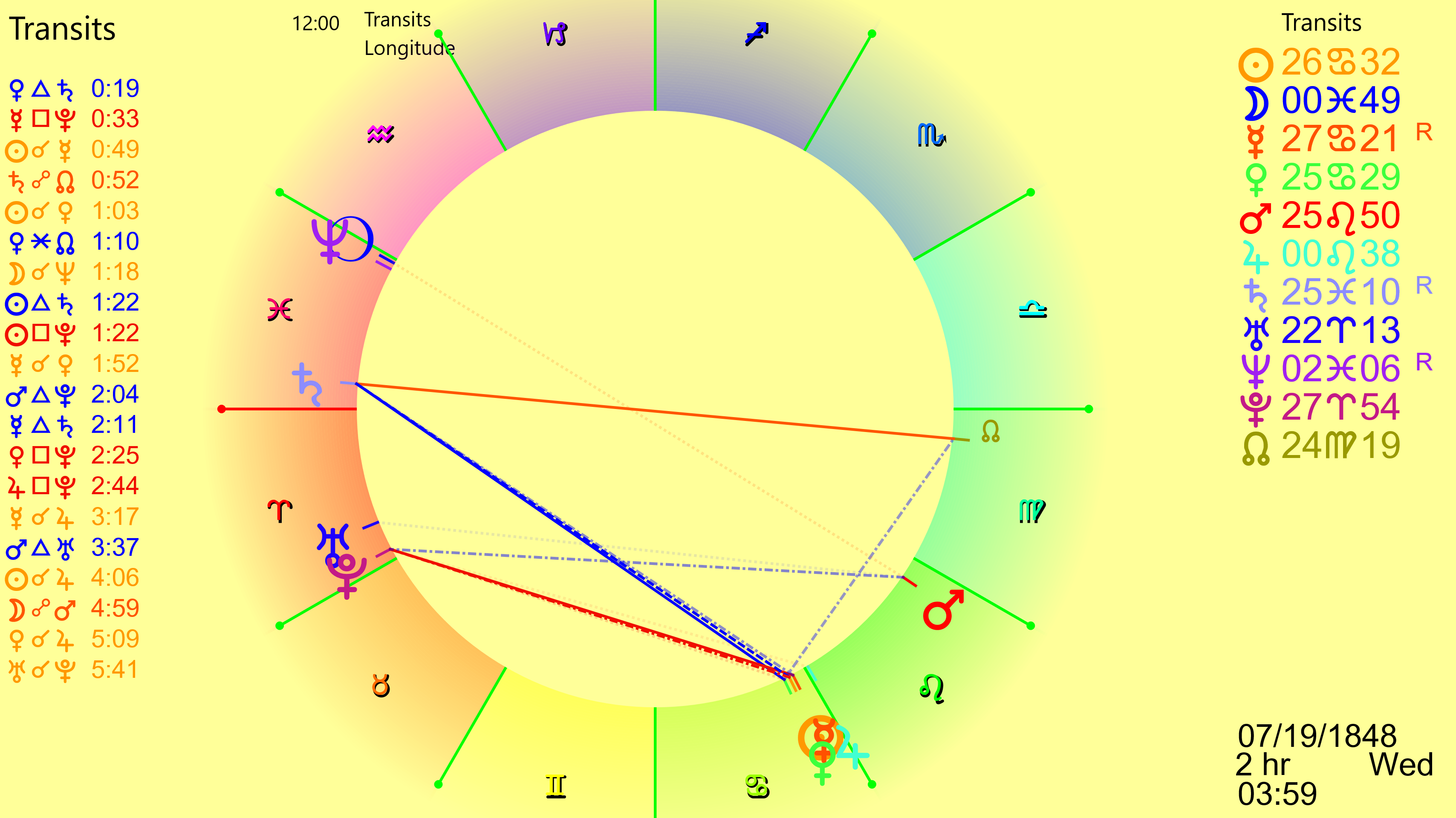
Seneca Falls Convention
In this 500 year period between the development of the printing press and the development of the Internet there were five Uranus Pluto conjunctions. The second one was mentioned briefly at the birth of Descartes. This was the height of the English Renaissance when Shakespeare wrote many of his plays. The fourth such conjunction of this period was about 1850; this period saw the rise of Feminism in the United States (Seneca Falls convention) and the “Year of Revolution” in Europe when all countries in that region except for England saw a revolution. There was a growth in Spiritualism due to women in the United States which was often combined with feminism — see for example the life of Victoria Woodhull. She was also he first woman to run for President, even though women would not get the vote until the next century.
So that is the history of the last 500 years as shown by the five Uranus-Pluto conjunction during that period. The next conjunction of those two planets occurs in 2103, 2104, 2105. Few now alive will live to see that conjunction.

